Showing posts with label Syria. Show all posts

Friday, 21 December 2012

Local Opposition Councils Act As Government In Parts Of Syria

Now that the U.S. and more than 100 other countries have recognized Syria's opposition coalition, the dynamics are changing for local councils in provinces under rebel control. These councils are going to get money and become humanitarian aid organization and now they have to figure out how to deliver 1,200 tons of bread a day for a population of 6 million people in Aleppo province. Melissa Block talks to Deborah Amos.

Copyright © 2012 National Public Radio. For personal, noncommercial use only. See Terms of Use. For other uses, prior permission required.

MELISSA BLOCK, HOST:

To Syria now, where rebel forces are claiming a string of territorial gains, including six towns in the central province of Hama. As the fighting continues, there are also diplomatic efforts to establish leadership that could take over when Bashar al-Assad's regime falls. This month, more than 100 nations, organized as the Friends of Syria, backed an opposition coalition to replace Assad.

Now local councils loyal to that coalition are beginning the work of government in rebel-held areas. NPR's Deborah Amos has been in Syria's northern provinces over the past few weeks. She joins me now from Istanbul. And Deb, talk a little bit about who is in these local councils and what they're doing.

DEBORAH AMOS, BYLINE: Melissa, I recently spent an afternoon listening to the debates of the local council for Idlib province. These are 18 people, activists, mostly professionals, lawyers, a pharmacist, a baker. There were three women in the group. And like most local governments, what they were debating was their budget, $800,000. It's the Idlib province share of an $8 million donation from the Gulf state of Qatar.

This is the first international donation that came directly through the Syrian coalition now recognized by the U.S., and these councils in all of Syria's 14 provinces, are directly linked to that coalition. So the idea is to create a pipeline of funds down to the grassroots.

BLOCK: You mentioned, Deb, that the U.S. now recognizes this coalition, as well. So apart from the money from Qatar, is the U.S. or any other country sending financial support to these councils?

AMOS: I have seen no evidence that the U.S. is sending any money to these local councils or to the coalition. An activist from Barzay, a neighborhood in Damascus, told me that local council members from seven neighborhoods in the capital slipped out to Jordan to pick up $300,000 from the French. Now, the money is to get these councils up and running - again, from the French to the newly recognized coalition and down to the grassroots.

For the councils, there's a humanitarian crisis in the country. Flour and fuel are in short supply. The electricity is off in many places. It's snowing here in Istanbul, so it is very grim in Syria. So these councils are now in crisis management. They have to get fuel and flour into these cities where the bread lines are up to six to eight hours long.

BLOCK: And do these local council members have any real authority in these areas where rebels are fighting?

AMOS: They have legitimacy among activists and some rebel groups are represented on the council. What counts is the larger population, and they are desperate as it gets colder and the food's running out. So the bread crisis is a test. For example, in Aleppo, there's a 250 member transitional revolutionary council. The head is a 67-year-old civil engineer. His name is Dr. Jalal Kangi(ph).

They got $1 million from the Qatar donation and what they did this week is they made a deal with the Turkish government to allow donated fuel intoAleppo without paying taxes. Dr. Kangi and his advisors say they have to get 1,200 tons of flour into Aleppo to feed people. So you can see that this million dollars doesn't go very far.

BLOCK: Deb, you've been reporting a lot on how fragmented the various rebel groups are in Syria. And let's talk a bit about the radical Islamist groups - for example, the al-Nusra front. Would those groups accept a civilian democratic leadership in Syria like these local councils would represent?

AMOS: Not at all. Al-Nusra has been very specific. In YouTube videos they are fighting for an Islamic state. The council represents activists. In the early days of the revolt, these were the people that were leading the peaceful protests and these are the people who want a civilian democratic Syria. When you ask them about the radical Islamists, what they say is money will make the difference.

If the councils can show they can govern; if they can supply bread, fuel; if they can get a police force operating; they can blunt the radical argument. They can't make it go away. The longer the war goes on, the more sectarian it will be and the stronger the Islamists become. Dr. Kangi in Aleppo, said you have to begin this funding now. Syria is a ruined country but the aid is only trickling in.

BLOCK: That's NPR is Deborah Amos, who's been reporting from northern Syria over the past few weeks. She's now in Istanbul. Deborah, thanks so much.

AMOS: Thank you, Melissa.

Copyright © 2012 National Public Radio. All rights reserved. No quotes from the materials contained herein may be used in any media without attribution to National Public Radio. This transcript is provided for personal, noncommercial use only, pursuant to our Terms of Use. Any other use requires NPR's prior permission. Visit our permissions page for further information.

NPR transcripts are created on a rush deadline by a contractor for NPR, and accuracy and availability may vary. This text may not be in its final form and may be updated or revised in the future. Please be aware that the authoritative record of NPR's programming is the audio.

View the original article here

Thursday, 20 December 2012

U.S. Officials: Syria Has Prepared Several Dozen Chemical Bombs

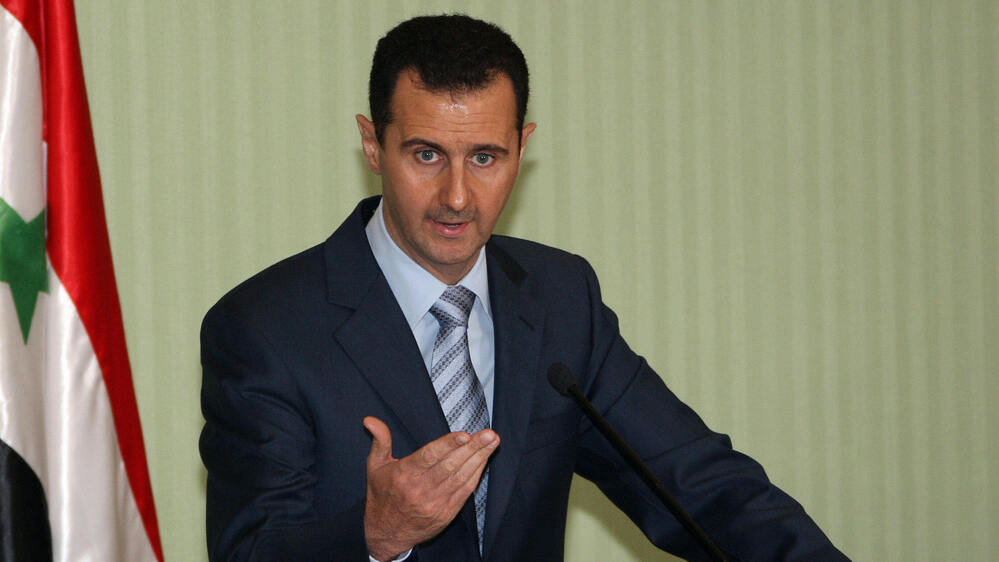
President Obama has warned Syrian President Bashar Assad, shown here in 2009, against using chemical weapons.

Louai Beshara /AFP/Getty Images President Obama has warned Syrian President Bashar Assad, shown here in 2009, against using chemical weapons. President Obama has warned Syrian President Bashar Assad, shown here in 2009, against using chemical weapons.

Louai Beshara /AFP/Getty Images

U.S. and allied officials say the forces of embattled Syrian President Bashar Assad have prepared several dozen bombs and shells loaded with the lethal chemical sarin.

The number is a larger estimate than has previously been reported. The Syrians loaded the weapons with the chemical agents in the past several weeks, the officials say.

Those preparations raise fears that the fighting against rebel forces could enter a new and more troubling phase, according to the officials, who requested anonymity.

They were particularly alarmed when Assad's forces fired Scud missiles at rebel positions earlier this week, initially believing that the warheads included sarin, one of the most deadly chemical weapons, which can kill victims within minutes.

Between three and eight Scuds were fired from the capital Damascus, according to Pentagon sources, toward rebel positions around the northern city of Aleppo, a distance of some 200 miles.

The U.S. and its allies are preparing for ways to address the chemical weapons threat.

CIA contractors are training rebels in Jordan on how to identify and safeguard chemical weapons that are located in dozens of sites around the country.

NATO Is Involved In Planning

NATO is stepping up planning. The Czech Republic, which has expertise in chemical weapons, is taking the lead on a more robust rebel training effort, officials said.

NATO is also identifying medical personnel who could be quickly dispatched to Syria to assist any casualties, officials said. And there is talk among the allies of reaching out to the Syrian population –- either through the international media or other means –- to describe the symptoms of exposure to chemical weapons. NATO also is considering airdropping medicines that could help Syrian civilians in the event of a chemical attack.

The alliance already has reached out to the Syrian National Coalition, which was recognized this week by the U.S., to begin planning for disposal of the chemical weapons if Assad is removed from power.

Still, a particular concern among allied officials is this scenario: Assad falls and various rebel groups begin fighting among themselves, which may make it more difficult to locate and secure the weapons.

The Syrian bombs and shells loaded with chemical agents were located at one or two air bases, officials told NPR. The mixture of two precursor chemicals creates sarin. But it has a limited shelf life.

"Once they have mixed them together, they're in a circumstance where it's kind of a use it or lose it," Charles Duelfer, a former U.N. weapons inspector, told NPR's All Things Considered. "That's why that indicator is quite troubling."

Those weapons could still be used, particularly as rebels continue to make gains in and around Damascus.

Still, there are indications, according to officials, that Iran and Hezbollah leaders have urged Assad not to use the weapons.

U.S. President Warns Syria

And so has President Obama.

"We simply cannot allow the 21st century to be darkened by the worst weapons of the 20th century," the president said recently. "If you [Assad] make the tragic mistake of using these weapons, there will be consequences and you will be held accountable."

White House spokesman Jay Carney, who didn't confirm the launch of the Scuds this week, said their use would be a sign of desperation. The Scud — a tactical ballistic missile developed by the Soviet Union during the Cold War and exported widely to other countries — is not considered a very sophisticated weapon. It's inaccurate and only useful for large targets.

So, officials say, the launch of the Scuds, together with the use of crude "barrel bombs" that combine explosives and nails, is a sign that Assad not only is becoming more desperate but also may be running out of conventional weapons. He is having a difficult time resupplying his weapons stocks, and rebels have overrun some of his military bases, seizing weaponry.

Analysts say Syria has the largest stockpile of chemical weapons in the Middle East, an arsenal that includes tons of chemical agents along with hundreds of bombs and missiles that can be loaded with chemicals.

Strong Evidence Of Weapons Stockpile

There's substantial evidence that Syria has chemical weapons.

Besides sarin, Syria also has mustard agent, developed during World War I, which can blister the lungs and damage the skin.

"First of all, Bashar al-Assad has not denied that he has chemical weapons," said Duelfer, the former U.N. inspector. "He has not, you know, agreed to the chemical weapons treaty."

Syrian Foreign Ministry spokesman Jihad Makdissi said in July that chemical weapons would never be used against the Syrian people, just "external aggression."

Duelfer also said there have been intelligence reports going back years showing Syrian forces testing chemical weapons.

"They've been testing the deployment mechanisms in ways so they're quite visible. So they've not been trying to conceal their capabilities. ... What makes them different as compared with regular explosives is you want the weapon to detonate above the ground. And then when they test, they put a grid on the ground so that they can see how the agent disperses. These types of tests are readily observable from, you know, the outside world. These things are not hidden."


View the original article here

Syria May Have Prepared To Use Chemical Weapons

Robert Siegel talks to Tom Bowman about Syria's chemical weapons.

Copyright © 2012 National Public Radio. For personal, noncommercial use only. See Terms of Use. For other uses, prior permission required.

AUDIE CORNISH, HOST:

From NPR News, this is ALL THINGS CONSIDERED. I'm Audie Cornish.

ROBERT SIEGEL, HOST:

I'm Robert Siegel.

And we're turning to the civil war in Syria now for a few minutes. We have new details suggesting the Syrian government may have prepared to use chemical weapons. U.S. officials say that, just a few weeks ago, Syria loaded bombs and artillery shells with the chemicals used to make the deadly nerve agent sarin.

NPR Pentagon correspondent Tom Bowman has been following the story and has information not yet reported. Tom, tell us more about what caused such alarm among U.S. officials.

TOM BOWMAN, BYLINE: Well, Robert, U.S. intelligence a few weeks ago picked up evidence that Syrian forces were combining precursor chemicals for sarin, the nerve agent. And what's new here is the number of bombs and shells that were apparently loaded with the chemicals. We're hearing there were several dozen, which is a much larger number than has been reported.

And that would explain why, as you remember, the president and Secretary of State Clinton warned Syria not to use chemical weapons and that there would be consequences.

SIEGEL: Any indication that the preparations continue despite those warnings?

BOWMAN: No, the administration said things appear to have settled down. But earlier this week, Syria fired Scud missiles, as many as eight of them, at rebel enclaves. And when this happened, there was real concern in Washington among military officials that these missile warheads contained that sarin gas, which is one of the most lethal of all chemical weapons. It can kill in minutes. Of course it turned out the Scuds did not have chemical weapons.

SIEGEL: Tom, what are you hearing about preparations by the U.S. in case chemical weapons are used or are about to be used?

BOWMAN: We're hearing CIA contractors are training rebels across the border in Jordan on how to secure and handle these chemical weapons. And NATO is also stepping up planning. The Czech Republic, formerly part of the Soviet bloc, has a great deal of expertise on chemical weapons and is said to be leading the effort for NATO.

And this includes possibly a larger training effort for the rebels, identifying medical personnel within NATO who could help should there be casualties. There's also some talk about even air-dropping medicines into Syria if they're needed. And then, finally, NATO is reaching out to Syrian opposition about how to secure these weapons in the chemical stockpiles, which are in dozens of sites around the country, should the Syrian regime fall.

SIEGEL: OK, thank you Tom.

BOWMAN: You're welcome.

SIEGEL: That's NPR Pentagon correspondent Tom Bowman.

Copyright © 2012 National Public Radio. All rights reserved. No quotes from the materials contained herein may be used in any media without attribution to National Public Radio. This transcript is provided for personal, noncommercial use only, pursuant to our Terms of Use. Any other use requires NPR's prior permission. Visit our permissions page for further information.

NPR transcripts are created on a rush deadline by a contractor for NPR, and accuracy and availability may vary. This text may not be in its final form and may be updated or revised in the future. Please be aware that the authoritative record of NPR's programming is the audio.


View the original article here