Monday, 31 December 2012

A Swell Of Elections In Post-Arab Spring Middle East

Two years after the Arab Spring changed the political landscape in Middle East, the region realized this year that the second stage of the pivotal uprisings is more difficult than the euphoric first. Host Jacki Lyden talks to Robin Wright, a joint fellow at the U.S. Institute of Peace and the Woodrow Wilson International Center, about the important events in 2013 expected to shape the future of the Middle East.

Copyright © 2012 National Public Radio. For personal, noncommercial use only. See Terms of Use. For other uses, prior permission required.

JACKI LYDEN, HOST:

Yesterday, we spoke with NPR's Cairo bureau chief, Leila Fadel, about the news she's covered in Egypt in 2012. Now, we're going to look forward. Robin Wright has written extensively about the Middle East as a former correspondent for The Washington Post. She's a joint fellow at the U.S. Institute of Peace and the Woodrow Wilson International Center and an author. And she joins me now in our studio. Robin Wright, thank you very much for coming in.

ROBIN WRIGHT: Thank you.

LYDEN: And happy New Year.

WRIGHT: Same to you.

LYDEN: So from your longtime analyst perspective, I know you have been back to Tunis this year, back to North Africa, back to the region, what can we expect from the Middle East in 2013?

WRIGHT: Well, 2013 is probably going to be more difficult than the first two years of the Arab uprisings. In the past two years, we've seen a deepening of the political divide, a worsening of the economic challenges and real security problems. But 2013 is really interesting because of all the elections across the region. You have Israel's election in January. Bibi Netanyahu is likely to win, but he's facing an increasing challenge from the right.

And, in fact, the most interesting trend in the region is the rise of the right or the religious right everywhere. Jordan faces elections in January, Egypt probably in February. And that will decide whether the Muslim Brotherhood really has a hold on power or whether there's a challenge from the religious right, the Salafis. And then you have Tunisia and Libya facing new constitutions and elections for permanent governments: Iraq local elections, Palestinians' long-delayed elections. It will be a pivotal year on many fronts.

LYDEN: I want to talk about phase two of the Arab Spring, because we're talking about the rise of the religious right. Not much U.S. influence to be seen, really, is there, in terms of U.S. ability to have anything to do with what goes on internally in Egypt.

WRIGHT: Well, when you remove dictators, you find that democracies have lots of constituents that they have to be accountable to and lots of different opinions. And so it's harder for the United States to have influence. This is also a period where throughout the region, there's a sense that they have captured control of their future, that this isn't in some ways, an end of 200 years of colonial Western presence. And so the United States is going to have less influence, both because of the challenges inside and because of the new political realities.

LYDEN: We can't leave Syria completely off the table, obviously, a stark outlook, just rejected Russia's latest overture to broker peace talks.

WRIGHT: Syria is likely to face some kind of transition this year, whether it is a peaceful transition or whether it is the ouster of President Assad. The reality is that he can't survive politically anymore. The second question is, is the Syrian coalition that has been endorsed by the United States strong enough to be the alternative? They're very divided. And what happens in Syria will determine a lot about what happens during phase two in other parts of the region that have not witnessed transitions.

LYDEN: Phase two of the Arab Spring, you mean.

WRIGHT: Phase two.

LYDEN: Yeah. Robin, we probably can't leave this conversation without talking about one of the greatest powers in the Middle East, and that's Iran.

WRIGHT: Iran either has to step up and compromise with the world's major powers or on its controversial nuclear program or face the real danger of a military strike by whether it's Israel or the United States or some kind of international coalition. I think the Iranians are aware, particularly because of the increasing sanctions, that the international community is not going to compromise. The question is whether the supreme leader, Ali Khamenei, is willing to bite the bullet, literally, and compromise in ways that could potentially have political fallout inside Iran as well.

LYDEN: Robin Wright is the joint fellow at the U.S. Institute of Peace and the Woodrow Wilson International Center, also the author of "Rock the Casbah: Rage and Rebellion Across the Islamic World." Thank you so much, Robin.

WRIGHT: Thank you.

Copyright © 2012 National Public Radio. All rights reserved. No quotes from the materials contained herein may be used in any media without attribution to National Public Radio. This transcript is provided for personal, noncommercial use only, pursuant to our Terms of Use. Any other use requires NPR's prior permission. Visit our permissions page for further information.

NPR transcripts are created on a rush deadline by a contractor for NPR, and accuracy and availability may vary. This text may not be in its final form and may be updated or revised in the future. Please be aware that the authoritative record of NPR's programming is the audio.


View the original article here

Sunday, 30 December 2012

Street Signs Intended To Give Pakistani City New Direction

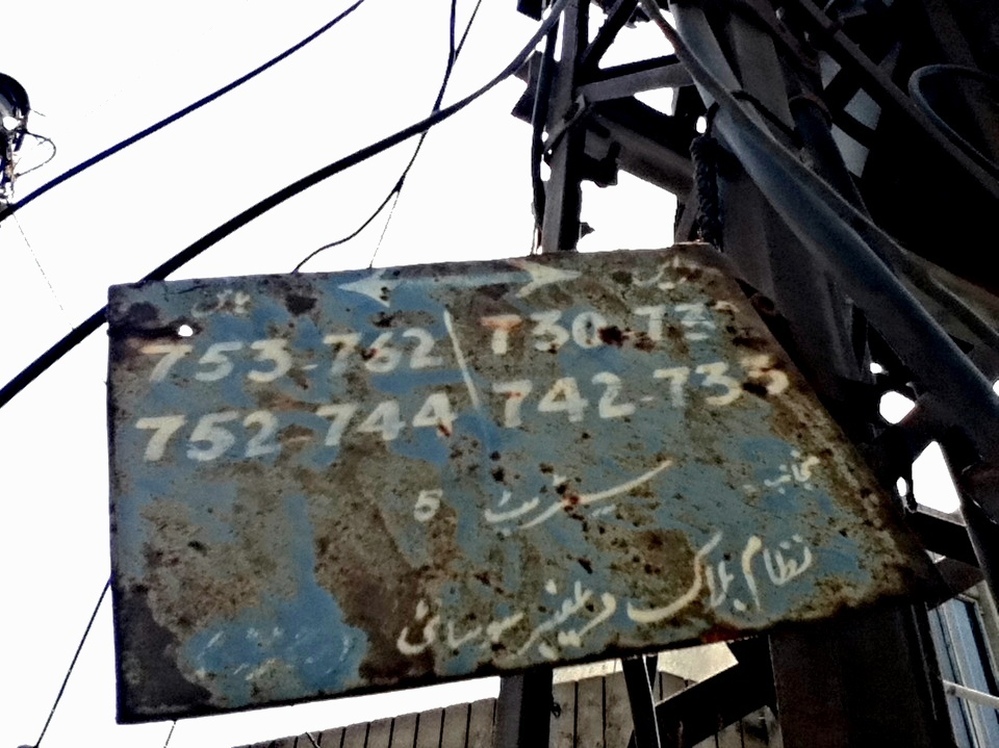
Street signs in the city of Lahore, Pakistan, are rare. The few that exist are in disrepair, like the one above. Two entrepreneurs are looking to change that and improve navigation in the city.

Dina Temple-Raston Street signs in the city of Lahore, Pakistan, are rare. The few that exist are in disrepair, like the one above. Two entrepreneurs are looking to change that and improve navigation in the city. Street signs in the city of Lahore, Pakistan, are rare. The few that exist are in disrepair, like the one above. Two entrepreneurs are looking to change that and improve navigation in the city.

Dina Temple-Raston

Landlords built Lahore in a haphazard way over centuries. They didn't concern themselves with city grids or sensible mapping. As a result, Lahore is renowned in Pakistan for being almost impossible to navigate.

And that's where Asim Fayaz and Khurram Siddiqi come in.

Fayaz and Siddiqi won a $10,000 grant from TED, the U.S.-based foundation that promotes ideas in a variety of fields and often helps fund them. Their project was to do something that seems pretty straightforward: Put up some street signs in a pilot program in one neighborhood of Lahore.

The Kindness Of Strangers

It sounds simple, but it could change the city. To understand why, you need to know that getting around in Lahore, and in a lot of Pakistani cities, is dependent, literally, on the kindness of strangers.

You get a general direction from one person and then you roll down your window and ask five or six more along the way. People don't mention street names. Instead, they identify landmarks.

"Drive until you see the Habib Bank, then make a left," they say. "When you see the corner shop with the Pepsi sign, make a right."

There is such a dearth of street signs in Lahore that last year Google Maps began using landmarks — not street names — when it provided directions around the city.

Siddiqi says that just isn't sustainable.

"We want to minimize dependence on landmarks," he says. "Let me give you an example: For a long time, there was a building being built by my house and it took forever to be made. So people were like, 'Just turn left where the construction is' ... and when the building was completed, people just couldn't find my house."

Fayaz and Siddiqi took me to Allama Iqbal Town, where they plan to launch a prototype of their street sign. It is one of the most densely populated localities in Lahore and we go in search of the competition: existing street signs. They are few and far between.

Fayaz spots the first one. It is only a little bigger than a 5-by-7 index card and all twisted metal and Urdu lettering. It is hanging about 10 feet off the ground on a pole. And it was almost impossible to spot.

Fayaz and Siddiqi are having to master the science of street signs.

"There are lots of factors: What speed are you traveling? What direction are you looking at? The driver's eye shouldn't stray too far from the road. There is a certain angle," Siddiqi says. "Of course another constraint that will come in, obviously, is the cost of production."

The first phase of the project will include about 100 signs in a square block area of Iqbal Town. (Omer Sheikh, a Google Map Maker Advocate for Pakistan, is also part of the street sign team.)

And the two entrepreneurs are hoping that local residents love their streets signs so much they will inspire others to follow suit. That said, they don't think this will be easy. For generations, Pakistanis have been rolling down their windows to ask for directions every couple of blocks. So Fayaz and Siddiqi plan to launch an education campaign to convince Lahore residents that street signs are better.


View the original article here

Israel's Arabic Citizens Plan Election Boycott

A growing number of Israel's Arab citizens are planning to boycott January's parliamentary elections. Already, pollsters say that fewer Arabs will vote in the upcoming elections than ever before. Palestinian leaders in Israel say it is because each year the government becomes more right-wing and they feel more ostracized.


View the original article here

At Least 19 Shiite Pilgrims Killed In Pakistan Suicide Attack

A suicide bomber driving a vehicle packed with explosives rammed into a bus carrying Shiite Muslim pilgrims in southwest Pakistan on Sunday, killing 19 people, a government official and eyewitnesses said.

Earlier Sunday, 21 tribal policemen believed to have been kidnapped by the Taliban were found shot dead in Pakistan's troubled northwest tribal region, government officials said.

Pakistan has experienced a spike in killings over the last year by radical Sunni Muslims targeting Shiites who they consider heretics. The violence has been especially pronounced in Baluchistan province, where the latest attack occurred.

In addition to the 19 people killed in the bombing in Baluchistan's Mastung district, 25 others were wounded, many of them critically, said Tufail Ahmed, a local political official. The blast completely destroyed the bus that was hit and damaged a second bus carrying Shiites that was close by.

An eyewitness who was traveling in the second bus told Pakistan's Geo TV that first bus contained over 40 pilgrims headed to neighboring Iran, a majority Shiite country that is a popular religious tourism destination.

A second eyewitness said the bomber rushed by in a pick-up truck, swerved in front of the first bus and slammed on the brakes. The bus slammed into the pick-up truck and then a big explosion occurred.

Neither of the eyewitnesses provided their names while being interviewed on TV.

Shiites make up around 15 percent of Pakistan's 190 million people. They are scattered around the country, but the province of Baluchistan has the largest community, mainly made up of ethnic Hazaras, easily identified by their facial features which resemble those of Central Asians.

Sunni extremists have long carried out attacks against Shiites in Pakistan. But the sectarian campaign has stepped up in recent years, fueled mainly by the radical group Laskar-e-Jangvhi, aligned to Pakistani Taliban militants headquartered in the tribal region. More than 300 Shiites have been killed in Pakistan this year, according to Human Rights Watch.

The violence has pushed Baluchistan in particular deeper into chaos. The province was already facing an armed insurgency by ethnic Baluch separatists who frequently attack security forces and government facilities. But the secessionist violence has been overtaken by increasingly bold attacks against Shiites.

The sectarian bloodletting adds another layer to the turmoil in Pakistan, where the government is fighting an insurgency by the Pakistani Taliban and where many fear Sunni hardliners are gaining strength. Shiites and rights group say the government does little to protect Shiites and that militants are emboldened because they are believed to have links to Pakistan's intelligence agencies.

The 21 tribal policemen who were shot dead were found by officials shortly after midnight Sunday in the Jabai area of Frontier Region Peshawar after being notified by one policeman who escaped, said Naveed Akbar Khan, a top political official in the area. Another policeman was found seriously wounded, said Khan.

The 23 policemen went missing before dawn Thursday when militants armed with rocket-propelled grenades and automatic weapons attacked two posts in Frontier Region Peshawar. Two policemen were also killed in the attacks.

Militants lined the policemen up on a cricket pitch late Saturday night and gunned them down, said another local official who spoke on condition of anonymity because he was not authorized to talk to the media.

Also Sunday, two Pakistani army soldiers were killed by a roadside bomb in the North Waziristan tribal area, the main sanctuary for Taliban and al-Qaida militants in the country, security officials said, speaking on condition of anonymity in line with official policy.


View the original article here

With Egypt's New Choices, The Burden Of Democracy

With former Egyptian President Hosni Mubarak ousted, there was space in 2012 for new political leaders to come forward. Host Jacki Lyden talks with NPR's Cairo correspondent, Leila Fadel, about the transformations that took place in Egypt in the past year.


View the original article here

Virtually Anyone Can See The Dead Sea Scrolls Now

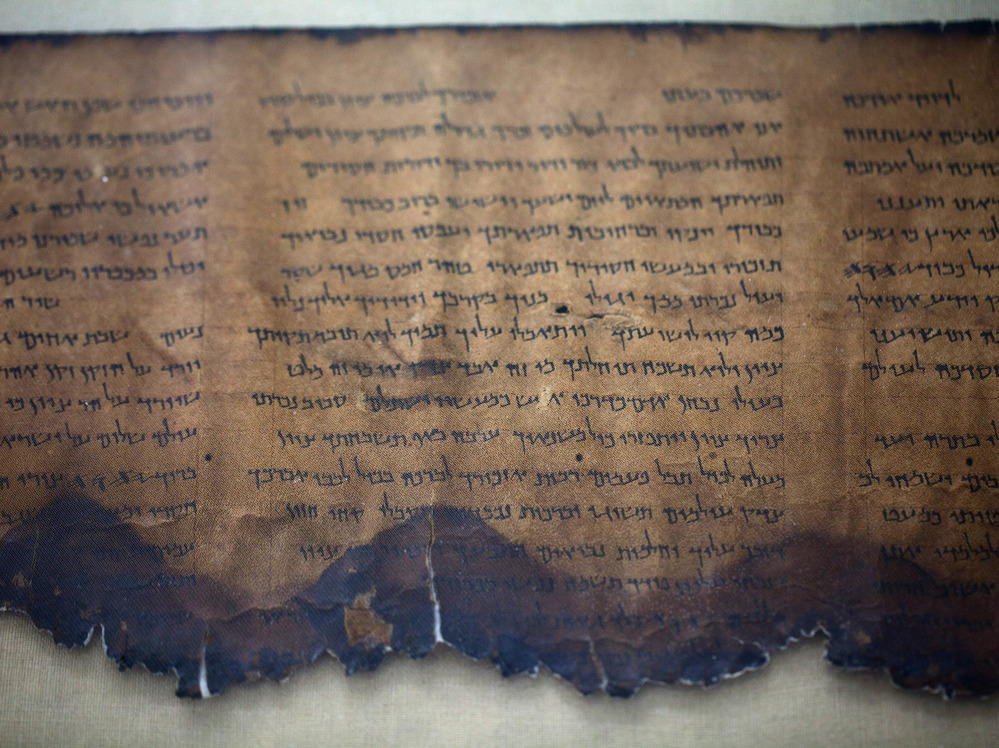
A fragment of the 2,000-year-old Dead Sea Scrolls is laid out at a laboratory in Jerusalem. More than 60 years after their discovery, 5,000 images of the ancient scrolls are now online.

Uriel Sinai/Getty Images A fragment of the 2,000-year-old Dead Sea Scrolls is laid out at a laboratory in Jerusalem. More than 60 years after their discovery, 5,000 images of the ancient scrolls are now online. A fragment of the 2,000-year-old Dead Sea Scrolls is laid out at a laboratory in Jerusalem. More than 60 years after their discovery, 5,000 images of the ancient scrolls are now online.

Uriel Sinai/Getty Images

This week, an ancient and largely inaccessible treasure was opened to everyone. Now, anyone with access to a computer can look at the oldest Bible known to humankind.

Thousands of high-resolution images of the Dead Sea Scrolls were posted online this week in a partnership between Google and the Israel Antiquities Authority. The online archive, dating back to the first century B.C., includes portions of the Ten Commandments and the Book of Genesis.

"Most of these fragments are not on display anywhere," says Risa Levitt Kohn, a professor of Hebrew Bible and Judaism at San Diego State University.

"In fact, even if you were to go to Israel, to the shrine of the book, you would not be able to see the 5,000 pieces that are online here," she tells Weekend Edition Saturday guest host Linda Wertheimer.

Some scrolls were already online — last year, Google and the Israel Museum collaborated to post five of them. This latest collection uses imaging techniques developed by NASA, allowing users to zoom in close enough to examine the texture of the skin the scrolls were written on.

Looking at an interactive image of the Book of Psalms, Kohn points out an example of a scribe's mistake — a letter written on top of a line of text.

"Parchment being very, very valuable, you couldn't scrap it and throw it in the trash," she says. "In the absence of a delete button, I guess you could say, they had to go write the additional letter that was missing. The only place they could actually do that is on the top of the line."

Over the years, Kohn has curated several Dead Sea Scrolls exhibitions. She says the Bible drives most people's interest in the scrolls.

"When it comes to Judaism and the early biblical period, this is really all we have in terms of ancient Hebrew texts," Kohn says. "This is really it, and I think that's incredibly powerful."


View the original article here

As Syrian War Grinds On, A Rebel Keeps Reinventing Himself

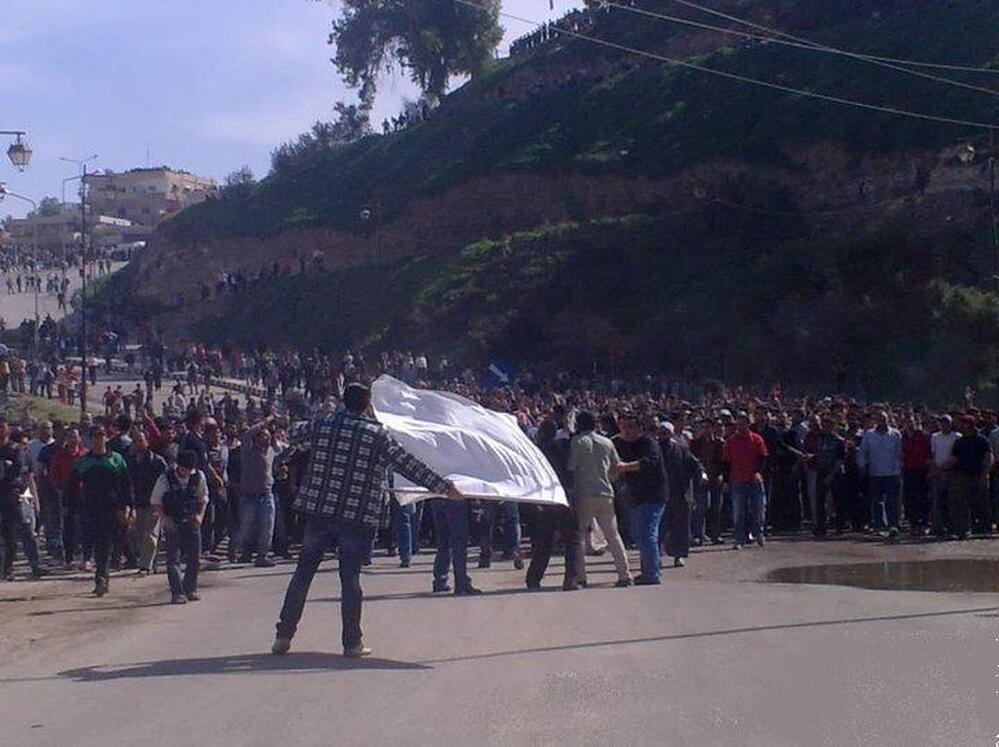
In March 2011, at the beginning of the Syrian uprising, protester Ibrahim Abazid made a massive white flag out of a sugar sack. This picture of him waving the flag in his hometown of Dera'a became a hugely popular image. Now Abazid hopes to serve on a city council in Dera'a.

Courtesy of Ibrahim Abazid In March 2011, at the beginning of the Syrian uprising, protester Ibrahim Abazid made a massive white flag out of a sugar sack. This picture of him waving the flag in his hometown of Dera'a became a hugely popular image. Now Abazid hopes to serve on a city council in Dera'a. In March 2011, at the beginning of the Syrian uprising, protester Ibrahim Abazid made a massive white flag out of a sugar sack. This picture of him waving the flag in his hometown of Dera'a became a hugely popular image. Now Abazid hopes to serve on a city council in Dera'a.

Courtesy of Ibrahim Abazid

Ibrahim Abazid had no idea he would be part of a nationwide revolt in Syria — or that his role would keep evolving.

It was March 2011. Some teenagers in his hometown, Dera'a, got arrested for spray painting anti-government slogans outside a school. Rumors began circulating that the teenagers were being tortured while in detention in the southern town.

In the broader region, Arab protesters had been filling the streets for months. Dictators in Tunisia and Egypt had already fallen. Abazid and his friends went to pray.

"Then on the Friday morning, we went to the mosque and it happened just like this — nobody planned it," says Abazid.

Unexpected Leader

Nobody planned that a few guys in the mosque would shout "God is greatest," then start spilling out into the streets. Nobody planned that guys from the other mosque in town would join them, that they'd all start protesting and insulting President Bashar Assad's government.

Soon, security forces showed up. Some protesters threw rocks. Security forces responded.

Syrian rebels shout "God is greatest," near the southern Syrian town of Dera'a in this still image taken from a video obtained by Reuters on May 17.

REUTERS TV/Reuters TV via Landov Syrian rebels shout "God is greatest," near the southern Syrian town of Dera'a in this still image taken from a video obtained by Reuters on May 17.

REUTERS TV/Reuters TV via Landov

"For five minutes or 10 minutes, all of us were hiding. Because in that moment nobody can move. Nobody can do anything," Abazid says.

Abazid took cover behind a wall. Then he saw something horrible — two of his friends shot in the chest.

"I saw the blood. I saw how they lost their life — I think I saw the soul when the soul left his body," Abazid says.

Abazid put the bodies into a car to get them to their families. He proceeded to make a large white flag out of a sugar sack. A picture of him waving that flag came to symbolize the uprising on Al-Jazeera, the satellite network.

Hundreds, maybe thousands, of additional people rushed to the streets that day. More people were killed; more protests followed. The Syrian uprising was under way.

Guns Versus Tanks

A month later, the Syrian army came to Dera'a, which is near the border with Jordan.

"When we saw [the army], they are coming with the tanks, with everything — with a lot — with thousands of security forces. In that moment, we know they are coming to kill us," Abazid says.

For three weeks, Dera'a had no electricity, no phones and little access to food. Anyone in the street past curfew could be killed by government snipers.

It was then that Abazid and his friends decided to fight back. And so began his first transformation, from a protester to a rebel fighter. The rebels killed security forces and stole their guns.

Abazid fought for more than a week, but then realized guns were no match for tanks. He decided to hide his gun in a school.

"I finished. No more killing," Abazid says.

"So you killed people?" he is asked.

"I'm not sure. Really, I'm not sure," he says.

Around Dera'a, soldiers left the army and joined the rebels. They started calling themselves the Jaish al-Hur — the Free Army. All over the country, men and boys did the same. Then the government started rounding them up.

"They caught me on my birthday — the 13th of May," Abazid says.

Abazid eventually was released on an amnesty order from the central government, but he later found out he was wanted by a branch of the intelligence service.

Then, a little boy who had been detained was returned — dead — to his family in Dera'a. A video of the boy's bruised and battered body went viral.

Abazid's mother begged him to leave Syria. He did and underwent his second transformation, becoming an aid worker and sending food and medical supplies back into Syria.

Planning For The Future

Abazid now lives in Jordan, just an hour's drive from Dera'a. Jordan is where I usually meet him, in his kitchen with his new wife. She and his mother now want him to leave Jordan and go to Europe. Before all this, he worked for an event-planning group in Dubai, in the United Arab Emirates.

But Abazid says he doesn't want to leave. That's because lately he has undergone yet another transformation, a path that has been followed by many young Syrians before him.

The former protesters, rebels and aid workers are now planning for a future Syria, certain in the belief that the days of the Assad regime are numbered.

Abazid says it's not enough to ask for freedom. You have to figure out what to do with it, he says.

"We know the meaning, but we don't have any experience," he says. "So now we are preparing ourselves to deserve that freedom."

Abazid recently went to a workshop sponsored by the U.S. State Department to help Syrian activists build local governments. He and his friends from Dera'a drew up plans for a city council of sorts that would help rebuild infrastructure, manage health care, even launch a program to buy back guns from rebel fighters once the conflict is over.

But he says they can't do this alone. The international community needs to step up, Abazid says, before Syria descends into chaos and his plans go to waste.

"The regime will leave. Maybe die, leave, I'm not sure. But the people, they will stay. So you have to help the people, please. It's good for you and for us. Because you are care about Middle East? Syria is the Middle East. So save Syria, you will save the Middle East," Abazid says.


View the original article here

Despite Protests, Egypt Has A New Constitution

After weeks of protests and intermittent violence, Egypt officially has a new constitution. Election officials say the Islamist-backed constitution passed a referendum with nearly 64 percent in favor. Secularists fear the charter would usher in Islamic rule and restrict freedoms.

Copyright © 2012 National Public Radio. For personal, noncommercial use only. See Terms of Use. For other uses, prior permission required.

RENEE MONTAGNE, HOST:

After weeks of protest, Egypt officially has a new constitution. It's the blueprint for a new democracy that's still finding its way. We've been reporting on the sometimes violent protests leading up to the vote and accusations that Islamist leaders and Egypt's new president were hijacking the process. NPR's Leila Fadel joins us from Cairo to discuss the latest.

Good morning.

LEILA FADEL, BYLINE: Good morning.

MONTAGNE: Now, the vision behind this constitution is that mainly of Egypt's Islamists. So describe for us the kind of society that it maps out for that country.

FADEL: Well, in some ways, people are concerned that this will expand the role of Islam in Egypt. It gives a consulting role to the highest religious authority. But also, it's quite similar to the 1971 constitution that was used during former President Hosni Mubarak's regime. And so many people actually are complaining that it's an authoritarian constitution that still allows for military trials of civilians, that doesn't protect minorities, that doesn't protect women. So those are the concerns when it comes to this constitution.

MONTAGNE: Well, given the protests - and some of them actually leading to some deaths - that led up to this final vote, how polarized would you say Egypt is now?

FADEL: I think we're still seeing an extremely polarized society. The vote was a 64 percent majority, but there were many people who didn't vote at all. There was a very low turnout of 33 percent. We're seeing a society that doesn't agree on the future of what Egypt should look like.

And I think we're going to continue to see some unrest, as well as really a mobilization politically of the opposition that we haven't seen before, trying to gain the upper hand in the parliamentary elections that are expected in two months, trying to have the influence that they've been unable to have so far, that Islamists have had because they've done so well at the polls.

MONTAGNE: Well, now, is there anything that might be defined as a sort of silent majority out there? You've got your opposition, which is very active. And, of course, you've got your Islamists who are controlling the government. What about all the other people out there, who aren't particularly political, what's the sense there?

FADEL: Yeah, I think there is what we would call the silent majority who don't see the constitution as the be-all, end-all of their life. They're more concerned with things like unemployment. How do I put food on the table? And that's the part of society that we don't really know what side they're on. And that's indicative of the turnout that we saw. Thirty-three percent is lower than any election or any vote that we've seen since this transition began. And that silent majority, I think, is more concerned with getting back to the issues at hand, having stability again so that they can just deal with their lives.

MONTAGNE: Now, the constitution, now that it is official, what all happens now?

FADEL: Now, we'll see the parliamentary elections possibly in two months. That parliament, the lower house of parliament was dissolved by the courts at the behest of the military. That election is coming up.

And we also will likely see other changes. There's rumors of a major cabinet reshuffle. There's a possibility of this business tycoon, Khairat El-Shater, who could be the new prime minister. Something that's still just rumors. We may see a shake up in the court. So we're expecting to see a lot of political movement now that the constitution is in place, because that was sort of what was holding back any changes politically.

MONTAGNE: Finally, where does this fight over the constitution leave Islamist President Mohamed Morsi?

FADEL: Well, I think he comes out of this quite emboldened. This follows four weeks of what is really the biggest challenge to his rule since he was elected. He was able to show that despite the complaints, despite the critics, this constitution did pass. So in some ways he's emboldened. But he's also bruised from this battle. And he's dealing with an extremely polarized society.

It also is supposed to mean that he gives up a lot of these exceptional powers that he took on in order to get the constitution through. And the constitutional decrees that really set off all this unrest are supposed to become void. So he'll no longer be above the law. So we'll see what happens in the weeks to come.

MONTAGNE: Leila Fadel is speaking to us from Cairo. Thanks very much.

FADEL: Thank you.

MONTAGNE: This is NPR News.

Copyright © 2012 National Public Radio. All rights reserved. No quotes from the materials contained herein may be used in any media without attribution to National Public Radio. This transcript is provided for personal, noncommercial use only, pursuant to our Terms of Use. Any other use requires NPR's prior permission. Visit our permissions page for further information.

NPR transcripts are created on a rush deadline by a contractor for NPR, and accuracy and availability may vary. This text may not be in its final form and may be updated or revised in the future. Please be aware that the authoritative record of NPR's programming is the audio.


View the original article here
Morsi Wins And Loses After Egypt Passes Draft Constitution

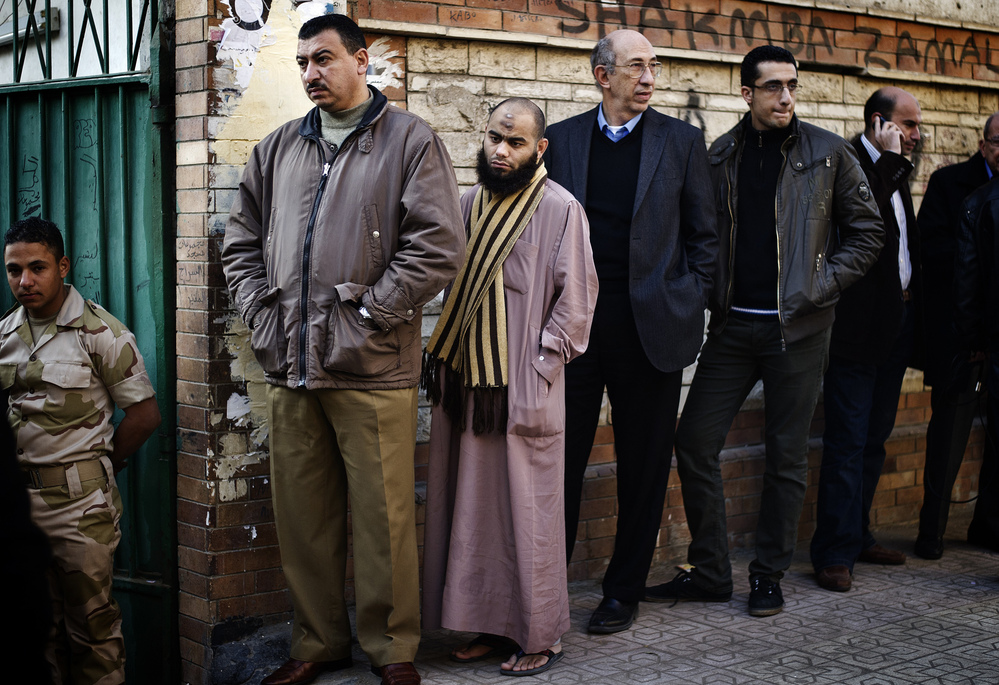
Egyptians wait in line to vote on a new draft constitution in Giza, south of Cairo, on Saturday.

Gianluigi Guercia/AFP/Getty Images Egyptians wait in line to vote on a new draft constitution in Giza, south of Cairo, on Saturday. Egyptians wait in line to vote on a new draft constitution in Giza, south of Cairo, on Saturday.

Gianluigi Guercia/AFP/Getty Images

Update Dec. 23, at 5:30 a.m.:

Egypt's constitution appears to have passed with 64 percent of Egyptians voting "yes," according to preliminary results issued by state-run media. But the document passed under a cloud of controversy as the opposition to the Islamist-backed document cried fraud.

Once official results are announced, President Mohammed Morsi is expected to give up his all-inclusive powers. A set of controversial decrees he issued last month, that effectively put him above the law, will be void when the constitution is adopted. He is also expected to hand over legislative powers to the upper house of parliament until a new lower house is elected and assumes its role as the legislature.

He appointed 90 members to the upper house of parliament, including 12 Christians and eight women, in an apparent bid to calm the opposition who have accused Morsi and the Muslim Brotherhood of dominating all political institutions.

The passage of the constitution is a victory for the embattled president after four weeks of political turmoil and intermittent violence centered on his rule. He comes out of this battle scarred, however, and observers say he has lost all support of revolutionary forces and building national consensus in the future will be difficult. The country is more polarized than ever and the vote on the constitution was marred by low turnout and claims of fraud.

Our original post continues below:

Egyptians voted late into the night Saturday on an Islamist-backed constitution that has polarized the nation. There seemed to be no question that the document would pass, bolstering embattled President Mohammed Morsi, who hails from the historic Muslim Brotherhood.

Opponents of the constitution say Egypt will remain unstable if the charter becomes law. They say they will continue to protest the Muslim Brotherhood, Egypt's new powerhouse.

The battle lines on the referendum have hardened, and in many ways the vote has morphed from a choice on a document to a referendum on the Brotherhood itself.

In the poor district of Imbaba, a neighborhood in the Giza district of greater Cairo, the nation's divisions were literally written on the wall. Scrawling black graffiti tags urged people to vote no to the constitution. Well-designed posters from the Muslim Brotherhood's campaign were hastily pasted up nearby.

Teacher Nadi Fouad, 42, patiently waited in a block-long line to vote. Dressed in a dapper suit, he said he planned to vote yes for the constitution and yes to stability. In the end, he said, the opposition will accept the results, the same way Egyptians accepted a divisive result during the presidential elections.

"They will opt for democracy, even if they appear to be harsh and revolutionary now," he said. A man nearby jeered, "Where is Morsi now?"

Fellow revolutionaries no longer feel sympathy for the once-oppressed group now that it has become Egypt's ruling party.

Now they are mobilizing against the group, criticizing it for forgetting about human rights and reform. But the organization and efficiency that the Brotherhood has consistently shown in Egypt's nearly two-year transition has so far eluded all other political and revolutionary forces.

"I will vote no and we will see the results," Nour Osama, a 19-year-old law student, said at a polling station in Giza.

But she said she knows that this constitution will pass. Many who agree with her have given up already and aren't voting.

"The Brotherhood are a majority of Egypt. All of them are going to vote and on our side some of us are going to vote and others are staying home," she said. "They will win. But the revolution will carry on, we will protest again and again and again."

Early results of the first phase of the two-part vote last weekend showed a majority voting for the constitution. Revolutionary groups reported some violations during the voting process, although there were no substantiated claims of systemic fraud.

The turmoil of the last four weeks, since Morsi issued a decree that effectively put him above the law until a new constitution is in place, sparked many critics to call the president a new dictator.

The constitution being voted on was adopted by a largely Islamist body. Most others involved in drafting the document withdrew in protest over what they say is a constitution that fails to abolish military trials for civilians, effectively limit the powers of the president and protect minority rights — all while slightly expanding the role of Islam in Egypt.

Morsi's decisions were a catalyst for mass protests and some of those turned violent, leaving Brotherhood members and opponents dead in clashes. Critics of the Brotherhood accuse the organization of using Mubarak-era tactics, sending thugs to attack critics.

In a twist late Saturday, Egypt's vice president resigned. Mahmoud Mekki, a judge who long fought for the independence of the judiciary, said he'd planned to resign earlier but couldn't due to the political climate. In the past month he has defended Morsi's policies and called for national dialogue. He steps down just as it appears that the position of vice president will be eliminated in a new constitution.

On Saturday, most people interviewed said they are tired — tired of political jockeying, the battles over politics and the protests. They just want a little stability.

Walid Mahmoud Ashri, a mechanic in the neighborhood of Dokki in greater Cairo, said he just wants it over. He voted yes to the constitution and hopes that means that soon Egyptians' real problems will be addressed — security, unemployment and poverty.

"During the days of Mubarak, yes, he stole from us, but there was stability, safety, there was no terrorism," he said. "There are many people who haven't received their rights — workers, those who are not employed, these people don't have rights, and these are the majority of the people."

Results are expected as early as Sunday.


View the original article here

Friday, 21 December 2012

Local Opposition Councils Act As Government In Parts Of Syria

Now that the U.S. and more than 100 other countries have recognized Syria's opposition coalition, the dynamics are changing for local councils in provinces under rebel control. These councils are going to get money and become humanitarian aid organization and now they have to figure out how to deliver 1,200 tons of bread a day for a population of 6 million people in Aleppo province. Melissa Block talks to Deborah Amos.

Copyright © 2012 National Public Radio. For personal, noncommercial use only. See Terms of Use. For other uses, prior permission required.

MELISSA BLOCK, HOST:

To Syria now, where rebel forces are claiming a string of territorial gains, including six towns in the central province of Hama. As the fighting continues, there are also diplomatic efforts to establish leadership that could take over when Bashar al-Assad's regime falls. This month, more than 100 nations, organized as the Friends of Syria, backed an opposition coalition to replace Assad.

Now local councils loyal to that coalition are beginning the work of government in rebel-held areas. NPR's Deborah Amos has been in Syria's northern provinces over the past few weeks. She joins me now from Istanbul. And Deb, talk a little bit about who is in these local councils and what they're doing.

DEBORAH AMOS, BYLINE: Melissa, I recently spent an afternoon listening to the debates of the local council for Idlib province. These are 18 people, activists, mostly professionals, lawyers, a pharmacist, a baker. There were three women in the group. And like most local governments, what they were debating was their budget, $800,000. It's the Idlib province share of an $8 million donation from the Gulf state of Qatar.

This is the first international donation that came directly through the Syrian coalition now recognized by the U.S., and these councils in all of Syria's 14 provinces, are directly linked to that coalition. So the idea is to create a pipeline of funds down to the grassroots.

BLOCK: You mentioned, Deb, that the U.S. now recognizes this coalition, as well. So apart from the money from Qatar, is the U.S. or any other country sending financial support to these councils?

AMOS: I have seen no evidence that the U.S. is sending any money to these local councils or to the coalition. An activist from Barzay, a neighborhood in Damascus, told me that local council members from seven neighborhoods in the capital slipped out to Jordan to pick up $300,000 from the French. Now, the money is to get these councils up and running - again, from the French to the newly recognized coalition and down to the grassroots.

For the councils, there's a humanitarian crisis in the country. Flour and fuel are in short supply. The electricity is off in many places. It's snowing here in Istanbul, so it is very grim in Syria. So these councils are now in crisis management. They have to get fuel and flour into these cities where the bread lines are up to six to eight hours long.

BLOCK: And do these local council members have any real authority in these areas where rebels are fighting?

AMOS: They have legitimacy among activists and some rebel groups are represented on the council. What counts is the larger population, and they are desperate as it gets colder and the food's running out. So the bread crisis is a test. For example, in Aleppo, there's a 250 member transitional revolutionary council. The head is a 67-year-old civil engineer. His name is Dr. Jalal Kangi(ph).

They got $1 million from the Qatar donation and what they did this week is they made a deal with the Turkish government to allow donated fuel intoAleppo without paying taxes. Dr. Kangi and his advisors say they have to get 1,200 tons of flour into Aleppo to feed people. So you can see that this million dollars doesn't go very far.

BLOCK: Deb, you've been reporting a lot on how fragmented the various rebel groups are in Syria. And let's talk a bit about the radical Islamist groups - for example, the al-Nusra front. Would those groups accept a civilian democratic leadership in Syria like these local councils would represent?

AMOS: Not at all. Al-Nusra has been very specific. In YouTube videos they are fighting for an Islamic state. The council represents activists. In the early days of the revolt, these were the people that were leading the peaceful protests and these are the people who want a civilian democratic Syria. When you ask them about the radical Islamists, what they say is money will make the difference.

If the councils can show they can govern; if they can supply bread, fuel; if they can get a police force operating; they can blunt the radical argument. They can't make it go away. The longer the war goes on, the more sectarian it will be and the stronger the Islamists become. Dr. Kangi in Aleppo, said you have to begin this funding now. Syria is a ruined country but the aid is only trickling in.

BLOCK: That's NPR is Deborah Amos, who's been reporting from northern Syria over the past few weeks. She's now in Istanbul. Deborah, thanks so much.

AMOS: Thank you, Melissa.

Copyright © 2012 National Public Radio. All rights reserved. No quotes from the materials contained herein may be used in any media without attribution to National Public Radio. This transcript is provided for personal, noncommercial use only, pursuant to our Terms of Use. Any other use requires NPR's prior permission. Visit our permissions page for further information.

NPR transcripts are created on a rush deadline by a contractor for NPR, and accuracy and availability may vary. This text may not be in its final form and may be updated or revised in the future. Please be aware that the authoritative record of NPR's programming is the audio.


View the original article here

Thursday, 20 December 2012

Amid Food Shortages, Syrian Opposition Now Runs Many Towns

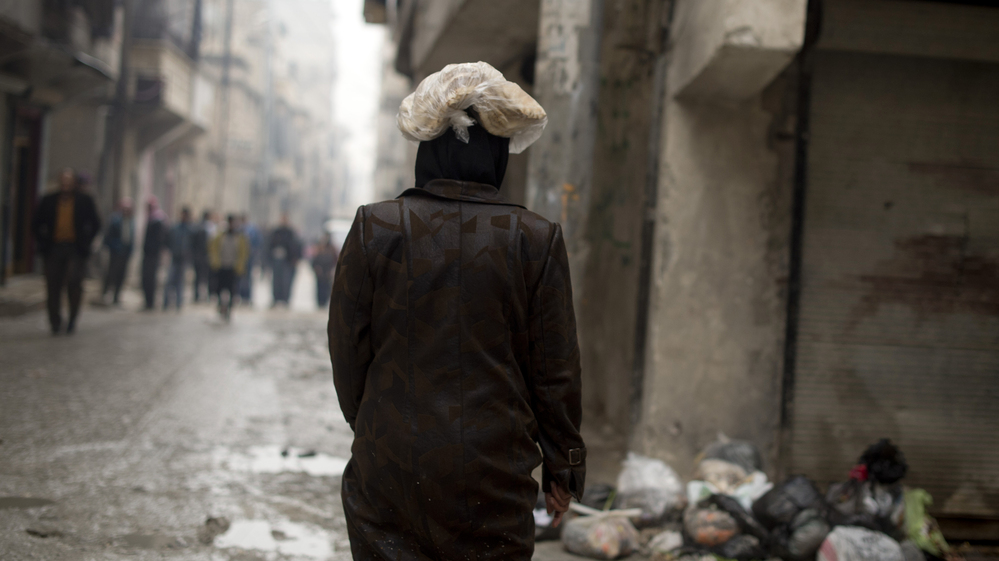
A Syrian woman carries a ration of bread on her head in the northern city of Aleppo. The Syrian opposition now runs local councils in many cities, particularly in the north. They often face major challenges in providing basics likes food, water and electricity.

Odd Anderson/AFP/Getty Images A Syrian woman carries a ration of bread on her head in the northern city of Aleppo. The Syrian opposition now runs local councils in many cities, particularly in the north. They often face major challenges in providing basics likes food, water and electricity. A Syrian woman carries a ration of bread on her head in the northern city of Aleppo. The Syrian opposition now runs local councils in many cities, particularly in the north. They often face major challenges in providing basics likes food, water and electricity.

Odd Anderson/AFP/Getty Images

As the Syrian opposition gains control of large swaths of territory in the country's north, local councils are emerging as the first alternative authority after 21 months of revolt.

It is still unclear if the civilian councils can impose order in war-torn areas where rebels have the power of arms. And at least parts of major cities remain in the hands of President Bashar Assad's forces.

However, as humanitarian aid trickles in, these activists hope the balance of power will shift to an elected civilian authority and fulfill the dreams of the revolt, which include democracy in Syria.

"We have established a number of offices, financial relief, medical and refugees," says a lawyer from the city of Idlib, in the northwest. He's taking a break from a lively council meeting in a barely furnished office in southern Turkey.

He's part of an 18-member council, elected in early December when 250 activists held a vote. The council members cross the Turkey-Syria border for meetings because it's safe. Like most local governments, this council has come together to discuss the budget.

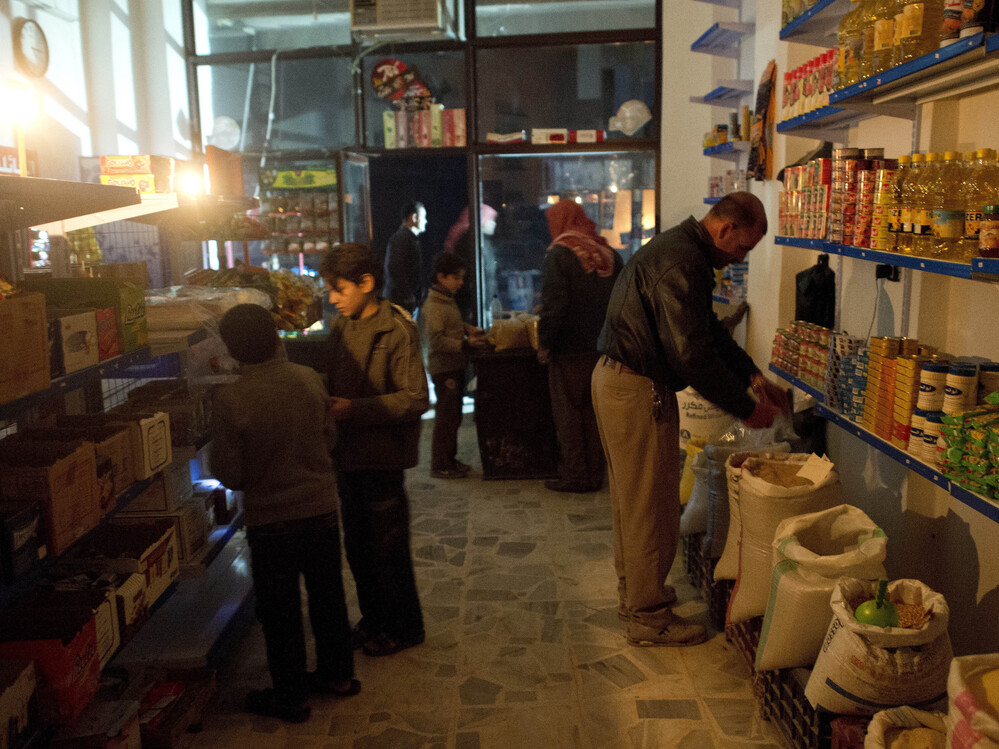
Customers shop by candlelight in a grocery store in Aleppo. The city has been hit hard by fighting in recent months, with both the opposition and the government controlling parts of the area.

Odd Anderson/AFP/Getty Images Customers shop by candlelight in a grocery store in Aleppo. The city has been hit hard by fighting in recent months, with both the opposition and the government controlling parts of the area. Customers shop by candlelight in a grocery store in Aleppo. The city has been hit hard by fighting in recent months, with both the opposition and the government controlling parts of the area.

Odd Anderson/AFP/Getty Images

"We are going to find ways for people in need," says Yasser, a lawyer, who can't be fully named for his security.

He pulls a bank book from his pocket to show that there is something to discuss. The government of Qatar donated $8 million to Syria's provincial governments in a meeting in Istanbul this month. Idlib's share is $800,000. But the gift won't go far, he says.

"Flour, food and some for the displaced people," he says. "We will make a vote in a democratic way."

Local Councils Are Strongest In The North

These formal local councils are strongest in Idlib and Aleppo province where the regime's hold, even over the central cities, is weakening.

The local councils, which now exist in all 14 Syrian provinces, are linked to the newly formed Syrian National Coalition, now recognized by the U.S. and more than 100 governments as the legitimate representative of the Syrian people. The new structure, an opposition group outside the country, with direct ties to the leadership in the provinces, is intended as a building block for a new government.

"Money will create social legitimacy, " says Gokhan Bacik, an assistant professor of international relations at Fatih University in Gaziantep, Turkey, and a specialist on Syria. "If it's used correctly, the opposition groups can create local authority."

But the humanitarian crisis is driving budget decisions.

The crucial problem is bread, a staple of the Syrian diet. There isn't enough to go around, and prices are soaring, in some places up 200 percent. The Syrian air force has targeted bakeries, the fuel has run out, and the basic commerce has broken down.

For the Idlib council, bread is the most important issue: how to get it into the province and how to pay for the flour. The projects for a salaried civil police department will have to wait.

Growing Food Shortages

The food crisis is especially dire in Aleppo province, where the main city, Aleppo, has been without water and electricity for weeks.

"There is hardly any bread," says Syrian journalist Samir Kanjo, who lives in southern Turkey but still has family in Aleppo. People who still have money can buy bread at 20 times the price, but 70 percent of the people in the city can't afford bread at any price, he says.

The civilian authority in Aleppo, called the Transitional Revolutionary Council, is a group of well-known activists headed by Dr. Jalal Edeen Kangi, a civil engineer and a professor from Aleppo University.

"Aleppo is led by people who are educated professionals; many of us were educated abroad," he says. "It's not a group of conservative, religious people."

Aleppo received $1 million from the Qatari donation, which immediately went to purchase wheat. Other needs were put on hold — like paying the salaries for 400 police officers and collecting a mountain of garbage festering on the city's outskirts.

"We have 6 million people in the province. We need 1,200 tons of bread a day," says a former city official who has been advising the council. He asked not to be identified by name for his security. "What is happening is crisis management. We are only thinking of the crisis."

The crisis is the first test of the governing skills of the Transitional Revolutionary Council. The legitimacy of this local leadership will depend on their ability to supply bread for an increasingly desperate population.

But the success of the local council depends on the international community, says Kangi, the head of the Aleppo council.

After recognizing the Syrian National Coalition in Morocco last week, Western and Arab governments pledged more than $200 million to back the new group. For Kangi, the money needs to come soon, because, he says, the councils need to provide more than bread to survive.

"We want to build a new Syria based on the 21st century," he says, but Syria right now is a land of ruins.


View the original article here

Benghazi Report Faults State Department

On Sept. 11 this year, U.S. Ambassador to Libya Chris Stevens and three other Americans were killed in Benghazi in what the Obama administration now calls a terrorist attack on the U.S. consulate. A review board said systematic management failures led to inadequate security at the consulate.

Copyright © 2012 National Public Radio. For personal, noncommercial use only. See Terms of Use. For other uses, prior permission required.

DAVID GREENE, HOST:

This is MORNING EDITION, from NPR News. Good morning. I'm David Greene.

STEVE INSKEEP, HOST:

And I'm Steve Inskeep.

Let's hear now what an independent panel says about security in Benghazi, Libya last September 11th. That's when attackers struck the U.S. consulate and killed four Americans there, including the U.S. ambassador. Republicans accuse the Obama administration of misleading the American people about what happened and downplaying links to terrorism. NPR's diplomatic correspondent Michele Kelemen has been covering this story for months. She's with us.

GREENE: Michele, good morning.

MICHELE KELEMEN, BYLINE: Good to be here.

INSKEEP: OK. So who was on this - this is a State Department appointed panel, right? Who's on it, and what did they conclude?

KELEMEN: Well, it was led by former Ambassador Thomas Pickering, a veteran of the State Department, and former chairman of the joint chiefs, Admiral Mike Mullen, both of whom will be on Capitol Hill today briefing members of Congress behind closed doors on their finding.

They poured over diplomatic cables, intelligence reports, and watched the security camera videos of the night of the attack. And their basic finding was that there were, as they put it, systemic failures in the State Department that resulted in a security posture that was inadequate for Benghazi and grossly inadequate to deal with the attack that took place that night.

They singled out the Bureau of Diplomatic Security and the Bureau of Near East Affairs, saying there was a lot of confusion about who was responsible. And in the public report, at least, they didn't single out any person in particular for disciplinary action.

INSKEEP: OK. You said public, because there's also a classified version of this.

KELEMEN: That's right.

INSKEEP: You also talked about the security posture. I want to be clear on this, because this can be so confusing. There's a political question about what was said after the September 11 attack, how it was described after. But when you talk about the security posture, that gets to the question of what happened before, how well-prepared people were for an attack. What do we learn here about the timeline of events, if anything?

KELEMEN: Well, we learned, first of all, that the security situation in Benghazi was getting worse and worse, there were lots of incidents, and that the consulate really was relying on temporary personnel and also local Libyan militias, that the local police force wasn't up to task.

INSKEEP: Now, that's normal, right? I mean, you rely on local forces to protect your embassy, but...

KELEMEN: You do, but in this case, in Benghazi, I mean, as you know, Steve, it's a more lawless part of Libya. It's not Tripoli. It's not where the government has sway. So you had these local militias dealing with it. And, you know, the picture that was painted in the report of the night of the attack, we didn't learn anything particularly new, but you see that it was a very complex attack. It was people first setting fire to the consulate. That's where the U.S. ambassador Chris Stevens and the information officer Sean Smith died. And much later, hours later, at an annex building, that was hit by RPGs. And that's where former Navy SEALS Tyrone Woods and Glen Doherty were killed.

INSKEEP: This investigation was started - a panel was appointed by Secretary of State Hillary Clinton. Is she saying anything about the findings?

KELEMEN: She sent letters to the committees that will receive the briefings, and says that she accepts all the recommendations that the panel made. She called it a clear-eyed look at the problems that the department is already starting to fix. Now, she was supposed to testify in public, but she's been ill and had a concussion. And her deputies are going to be doing the public briefings on Thursday.

INSKEEP: One other thing briefly, Michele Kelemen. We've heard from diplomats on our program worried that if the lesson taken from Benghazi is that diplomats should retreat behind walls, that that's the wrong lesson. One of the people saying that is former Ambassador Ryan Crocker, who was ambassador to Pakistan and Afghanistan and Iraq - some pretty dangerous places.

(SOUNDBITE OF SPEECH)

RYAN CROCKER: And if we're doing our jobs right, we're going to run that risk. I was an ambassador six times. In three of those posts, a predecessor was assassinated. It's not new. It's part of the cost of doing America's business. And I simply hope that we don't take the position after Chris's assassination that, gee, we shouldn't expose our people to danger. We need to do it.

INSKEEP: That's former U.S. Ambassador Ryan Crocker. And, Michele Kelemen, here in our studios, is there a danger of people retreating because of the political intensity of the reaction to this?

KELEMEN: It was one of the concerns that this panel raised repeatedly, and Secretary Clinton did in her letter. She says diplomats can't work in bunkers. And the report points out that you have al-Qaida fragmenting. There's lots of affiliates around the world. At the same time, there are demands that U.S. ambassadors work in hot spots and get out to the public.

INSKEEP: Michele, thanks very much.

KELEMEN: Thank you.

INSKEEP: That's NPR's Michele Kelemen.

Copyright © 2012 National Public Radio. All rights reserved. No quotes from the materials contained herein may be used in any media without attribution to National Public Radio. This transcript is provided for personal, noncommercial use only, pursuant to our Terms of Use. Any other use requires NPR's prior permission. Visit our permissions page for further information.

NPR transcripts are created on a rush deadline by a contractor for NPR, and accuracy and availability may vary. This text may not be in its final form and may be updated or revised in the future. Please be aware that the authoritative record of NPR's programming is the audio.


View the original article here

Syrian Crisis: Turkey Getting Patriot Missiles, Some U.S. Troops To Operate Them

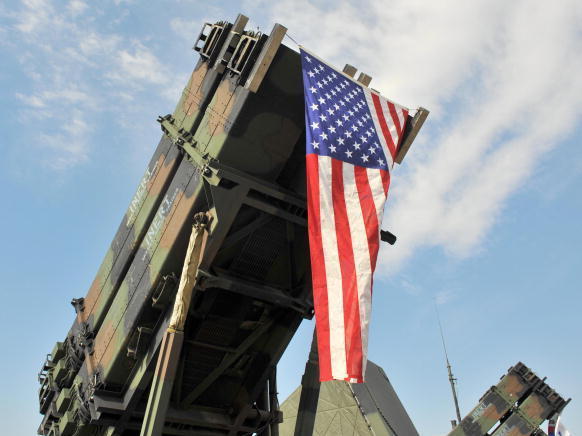
A U.S. Army Patriot Surface-to Air missile system on display in South Korea.

Kim Jae-Hwan /AFP/Getty Images A U.S. Army Patriot Surface-to Air missile system on display in South Korea. A U.S. Army Patriot Surface-to Air missile system on display in South Korea.

Kim Jae-Hwan /AFP/Getty Images

"The U.S. will send two batteries of Patriot missiles and 400 troops to Turkey as part of a NATO force meant to protect Turkish territory from a potential Syrian missile attack, the Pentagon said Friday." (The Associated Press)

CNN adds that "Defense Secretary Leon Panetta signed the order en route to Turkey, where he is visiting Incirlik Air Base, Pentagon spokesman George Little told reporters."

Panetta told CBS News that when the systems are in place, in about a month, Turkey "will be able to have a pretty complete defense missile protection system ... because of their concerns about that region and the threats that they think they are confronting." The 400 U.S. military personnel will be in Turkey to operate the systems.

The New York Times says "the American batteries will be part of a broader push to beef up Turkey's defenses that will also include the deployment of four other Patriot batteries — two from Germany and two from the Netherlands. All six units will be under NATO's command and control and are scheduled to be operational by the end of January, according to officials in Washington."

And The Wall Street Journal writes that:

"The deployment approved by Mr. Panetta would mark a sharp expansion of the Pentagon's role along Syria's borders and comes amid increasing U.S. concern that Syrian President Bashar al-Assad, under pressure from rebel forces, could resort to using chemical weapons. The U.S. says Mr. Assad recently used Scud missiles as part of his offensive against rebels, alarming countries in the region."


View the original article here

Latest Syrian Fighting Touches Off A New Exodus

YouTube

Residents Flee Damascus Suburb

NPR is not identifying the author, a Syrian citizen, for security reasons.

Daily fighting in Syria has become so commonplace that it often merits little attention. But recent Syrian air strikes against Yarmouk, a densely populated area outside the capital Damascus, touched off an exodus of residents and demonstrated the ripple effects of the violence.

The Syrian military attacked the area with fighter jets on Sunday, saying it was in response to infiltrations by "terrorists," the blanket term the Syrian regime uses for all the rebels.

A mosque and a school were among the buildings struck in this raid, according to residents. Both buildings were housing people displaced by earlier violence.

After the assault, the Syrian government forces told people to evacuate the area. Residents say government troops went around in cars with loud speakers, giving instructions for people to leave their homes immediately.

Thousands obliged. This footage posted on Youtube by an activist shows residents carrying suitcases as they walk down the street to leave the area. Cars with mattresses tied to their roofs are also headed out. One small pickup truck had about a dozen women, standing room only, in the back.

Yarmouk is a middle and working class neighborhood about a 25-minute drive from central Damascus. It is commonly referred to as "the Camp," because it has been home to a large population of Palestinian refugees since the 1950s. At last count, there were over 100,000 registered Palestinian refugees.

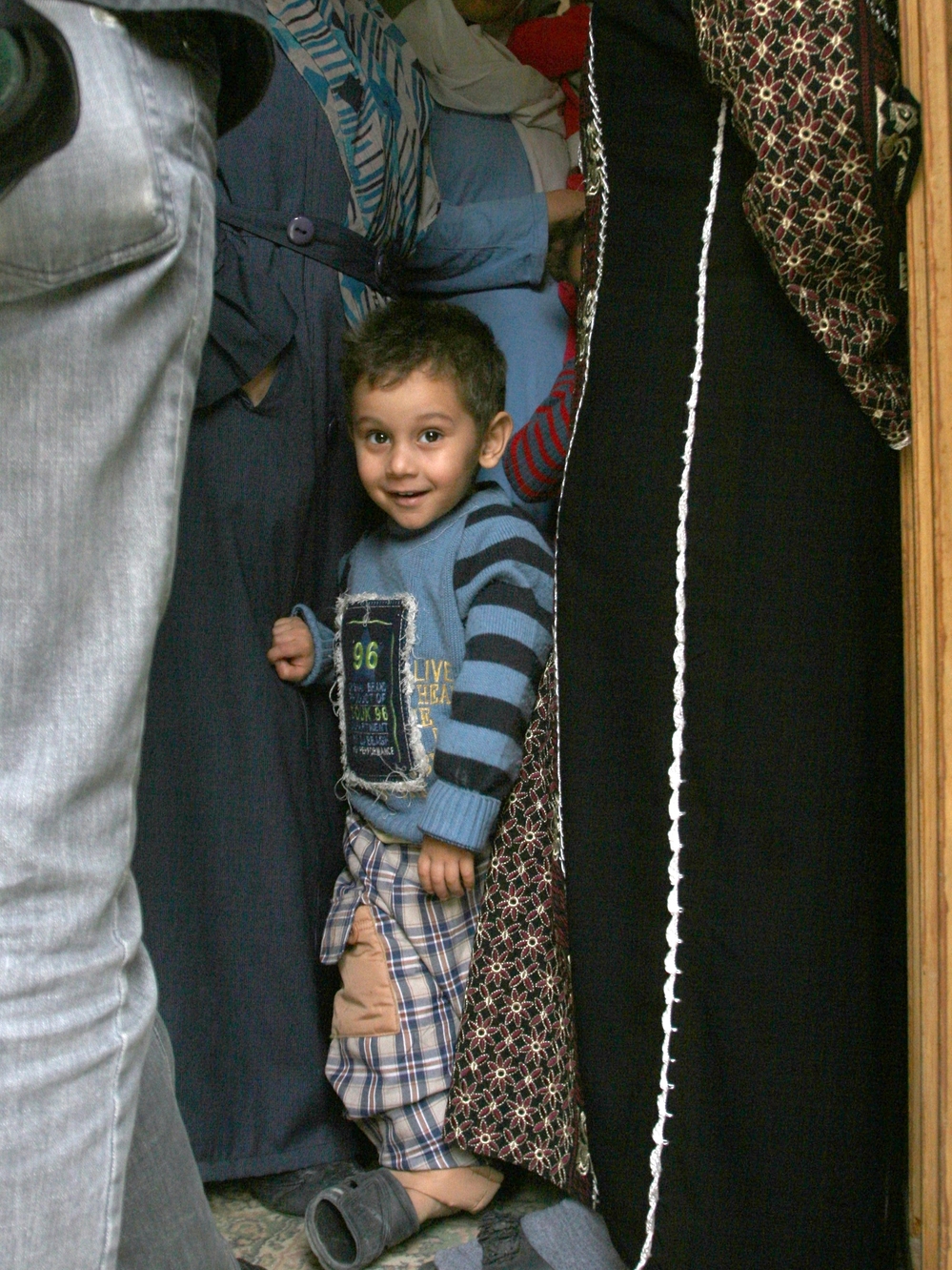
The family of this Palestinian boy was among many that fled the Yarmuk refugee camp near the Syrian capital Damascus after fighting in recent days. The boy and his family are shown at another refugee camp, this one in the Lebanese city of Tripoli, on Tuesday.

AFP/Getty Images The family of this Palestinian boy was among many that fled the Yarmuk refugee camp near the Syrian capital Damascus after fighting in recent days. The boy and his family are shown at another refugee camp, this one in the Lebanese city of Tripoli, on Tuesday. The family of this Palestinian boy was among many that fled the Yarmuk refugee camp near the Syrian capital Damascus after fighting in recent days. The boy and his family are shown at another refugee camp, this one in the Lebanese city of Tripoli, on Tuesday.

AFP/Getty Images

Over the decades, it also became home to many Syrians, including those displaced from the Golan Heights in the 1967 Arab-Israeli war.

Where To Flee?

As the residents fled, they faced limited choices. More than 2,000 have gone to Lebanon, according to media reports.

Damascus is close by, but almost every household is hosting relatives displaced from somewhere else. And almost every household is also involved in some sort of informal charity ring.

Sameer, for example, was displaced last summer from a Damascus suburb, and he and his wife currently live with her parents near central Damascus.

A personal trainer, Sameer has formed a charity group composed mainly of clients and friends. They rely on a network through various mosques to identify families in need.

"We make lists of what people need. How many blankets? Women's winter coats? Children's shoes?" he said. "We then each pool together donations from our circles, and we get the stuff and distribute it."

This week, they will focus on the people from Yarmouk, he said. "It's very sad, but our work never ends," he added.

Asked if he seeks any help from the government, he echoed a common sentiment.

"It's better for them not to know what we're doing," he said.

The Syrian security apparatus has been known to arrest, and sometimes torture, activists who provide humanitarian aid near areas suspected of harboring rebels. Cars filled with humanitarian supplies can become targets for interrogation and theft at checkpoints.

One activist was arrested for transporting schoolbooks meant for newly displaced families. The families had settled near a rebel-held area, so the activist was accused of aiding rebels.

Particularly contentious are medical supplies, which raise suspicions that they might be for injured rebels.

Among those displaced from Yarmouk this week were families who had only recently fled their homes elsewhere for the relative calm of Yarmouk.

Um Hassan, a grandmother, is one such example. Late last summer, she hosted her daughter and son-in-law and their two small children in her modest home in Husseiniyeh, just outside of the Shia stronghold town of Sit Zeinab on the outskirts of Damascus.

But the rebels soon arrived in her neighborhood, and the government launched a "cleansing campaign," bombarding Um Hassan's area with tank fire and mortar shells.

After sticking it out for days, Um Hassan and her daughter's family finally fled. Together they rented a one-bedroom in Yarmouk.

On Monday, Um Hassan packed her belongings again. This time, she headed to her brother's home in a troubled area near the Damascus International Airport, the scene of heavy fighting recently. Her daughter's family, along with their school aged children, went to the in-laws. It was their fourth flight from home in less than six months.


View the original article here

Who Benefits From Syrian Civil War?

Egyptians are voting on a new constitution - but the vote is polarizing the country. Meanwhile, in Syria, the main opposition group is now recognized by the U.S., but there are questions about al-Qaeda affiliates fighting alongside them. To make sense of the developments, host Michel Martin talks with Abderrahim Foukara of Al Jazeera International.

Copyright © 2012 National Public Radio. For personal, noncommercial use only. See Terms of Use. For other uses, prior permission required.

MICHEL MARTIN, HOST:

I'm Michel Martin and this is TELL ME MORE from NPR News. Coming up, you might not think of southeast Nigeria as a destination for your Hanukkah celebration, but in fact thousands of Nigerians of the Ebo ethnic group are celebrating Hanukkah this week. Our next guest celebrated with them three years ago and he's going to tell us more about this corner of the Jewish Diaspora in just a few minutes.

But first, we are going to head to North Africa and the Middle East. In Egypt tensions are high over a constitutional referendum planned for the next two weekends in Syria. There are new developments on the devastating, ongoing, bloody civil war there. Trying to help us make sense of everything is Abderrahim Foukara. He's the Washington bureau chief for Al Jazeera International and he's with us from time to time to help talk about events in the region. Welcome back. Thanks so much for joining us once again.

ABDERRAHIM FOUKARA AL JAZEERA INTERNATIONAL: You're welcome, Michel.

MARTIN: So let's begin with Egypt. Tell us about this constitutional referendum. I think a lot of people who have been following this story do understand there's been a lot of unrest in the country over the last few weeks, concerned over the president's efforts to aggregate more power to himself. Tell us about the referendum. What's going on?

INTERNATIONAL: Well, basically, when he went through what his opposition described as a power grab he tried to climb down. And the way he found to climb down was to rush the draft of the constitution through. So he got the draft of the constitution and he said, OK, I have two weeks to prepare for the referendum.

The opposition has problems not just with the content of the new constitution in terms of liberties and the status of women and so on. They also have a problem with the date of it. They say two weeks has not given them enough time to actually explain the content to their followers and to Egyptians at large.

So he seems to have got himself in a pickle. He also seems to have got the entire country in a pickle because Egyptians now are divided.

MARTIN: Is the opposition encouraging people to boycott the referendum?

INTERNATIONAL: There was a lot of discussion about what they were going to tell people to do. In the end, I think they've agreed by now that they will take part in the referendum but they are urging their followers to vote no, to vote against it.

MARTIN: To vote no and vote against. Does the international community, broadly speaking, do they have a stance on this? Obviously, it's an internal matter but what is their posture toward this?

INTERNATIONAL: Well, the U.S., for example, the Obama administration which seems to have now very close with the Morsi government in Egypt, seems to have taken an ambiguous position. They want him to have dialogue with these opponents and they've been very vocal about how the political tent, so to speak, should be made large enough for everyone to live under it in the future of Egypt.

They have not singled out any particular part of the drafted constitution for criticism. They just want it to be inclusive.

MARTIN: We're talking about events in the Middle East and North Africa with Abderrahim Foukara, Washington bureau chief for Al Jazeera International. Let's turn now to Syria. President Obama recently said that his administration formally recognizes the rebels who have been fighting President Bashar al Assad. Here is a clip of President Obama on ABC News. He's speaking with Barbara Walters on Tuesday.

(SOUNDBITE OF TV SHOW "GOOD MORNING AMERICA")

PRESIDENT BARACK OBAMA: We made a decision that the Syrian opposition coalition is now inclusive enough, is reflective and representative enough of the Syrian population that we consider them the legitimate representative of the Syrian people in opposition to the Assad regime. And so we will provide them recognition. And obviously, with that recognition comes responsibilities on the part of that coalition...

BARBARA WALTERS: That's a big step.

OBAMA: It is a big step.

MARTIN: Is the rest of the world seeing this, particularly people in the region seeing this, as a big step?

INTERNATIONAL: It depends who you talk to. I mean, for the coalition itself it's obviously a big step. That they now have 120 people recognizing them which means that they can open diplomatic representations in about 120 different countries, including the United States and Europe.

But there is some criticism, obviously. A lot of people are saying it's a big step for the Obama administration, it's a big step for this Syrian coalition. It may not necessarily be a big step for the Syrian people, people who have been demonstrating and getting killed and shot at for about 22 months.

A lot of people see this coalition as basically a front for international forces - the U.S., the Europeans, the Gulf Arabs - to interfere in the situation in Syria.

MARTIN: Well, what do you think is the more interesting question, the question of the Obama administration saying that some of these Syrian rebel groups are affiliated with al-Qaida or al-Qaida has now - I don't know what word they're using - has infiltrated or is now aligned with some of these rebel groups. Do we credit that?

INTERNATIONAL: I think that's a very, very, very important issue for so many different reasons. Because remember that in Libya, for example, when the U.S. consulate in Benghazi was attacked and initially reports were saying they were talking about these demonstrations against an anti-Muslim film connected to the attack on the Embassy. And in the end it turned out that it was actually attacked by a group that was described as a terrorist group.

And I think that the Obama administration doesn't want to repeat the same mistake from its point of view in Syria whereby he will be accused of working with terrorists to support Bashar al-Assad.

MARTIN: Well, what's the practical effect of this designation?

INTERNATIONAL: The effect of it is much more symbolic than anything else. Because there are other countries that will continue to work with Jabat al-Nusra. This is the main group that we are talking about. But if you look at the broader context, and if you look at the shift that seems to be happening in the Russian position, designating a group such as Jabat al-Nusra as a terrorist group it seems to be a concession to the Russians.

Because the Russians are worried about militant groups near Russia in places such as Chechnya and Dagestan. And one of the main reasons why they've been opposing the toppling of Bashar al-Assad is that they're worried about Islamist groups taking over in Syria.

So one way that the Obama administration could mollify some of those fears is to designate this group Jabat al-Nusra as a terrorist group. And the Russians seem to be now moving in a different direction from where they were, let's say, a month ago. The fact that they are now talking about Bashar not being able to control the country and talking about - literally they're saying now, the Russians, that the opposition does have a chance to actually win against Bashar al-Assad.

In the eyes of the critics of these outside forces in the Middle East, this is seen as being part of the haggling that's going on, which does not necessarily serve the interests of the Syrians themselves inside Syria.

MARTIN: Who are these critics? And what do they think would serve the interests of the Syrians inside Syria?

INTERNATIONAL: Even people among the Syrian opposition, or at least some of them, they've come to the conclusion that that's the way it is because Bashar al-Assad has been, in their eyes, killing his own people for 22 months. The Syrians have not been able to topple him themselves.

And they've been forced to seek help from the outside world. And the outside world has given not just political help, political assistance, it's provided them with weapons. And many of them say they must've done this for a price and the future of Syria would have to bear that price. So the outcome, they feel, would in the end serve the best interests of these outside forces, including some of Syria's neighbors, rather the interests of the Syrians themselves.

MARTIN: It's a fairly cynical view. I mean, on the one hand there's this ongoing demand for outside help. On the other hand, that help, when it's offered is now looked at askance?

INTERNATIONAL: It could be seen as a cynical position but the situation is this, in their eyes, is that 22 months ago the Syrians themselves rose up against Bashar. If they had been able to topple him themselves through peaceful means or even through an armed struggle themselves without the interference of the outside world, then the outcome would, by definition, be in their favor entirely.

But the fact that you've had all these difference forces - the Turks, the Gulf Arabs, the Russians, the Europeans, the Americans and others - the fact that you've had all these forces play a role in the toppling of Bashar al-Assad, the feeling is that comes with a price tag.

MARTIN: What is the source of Bashar al-Assad's continuing hold on power?

INTERNATIONAL: Military might is one of them. Russia standing up for him in the Security Council and elsewhere has been another source of power. The Russian position, as we said, has been shifting somewhat recently. But one of the most important ways that he's buttressed himself with is obviously Iranian support. We still do not know how the Iranians are reacting to all these shifting sands, if you will, of the situation inside Syria.

The Iranians, probably more than anybody else, have every reason to continue to back him up because they feel that if he goes one of the main pillars of Iranian influence in the Middle East will be gone.

MARTIN: You know, it's important to note that there are hundreds of thousands of Syrians on the move as this conflict has gone on, as you have pointed out, for some 22 months now with a very high, you know, loss of life. The dimensions of which we're not even absolutely sure about because it's been so hard to get information consistently out of these areas.

According to the United Nations, more than 500,000 Syrians are now refugees and have left. Many have crossed into Lebanon, Jordan, Turkey, even Iraq. Do you have some insights about what their situation is? What there circumstances? Obviously, that's a big territory of people to disperse to. But can you just tell us a little bit in the time we have left about what are their circumstances?

INTERNATIONAL: Well, it's not just refugees in neighboring countries. It's also displaced people inside Syria. There are estimates saying that over a million Syrians are now displaced. And you have to remember that this is the cold winter season. They don't have fuel. They don't always have shelter, especially those inside Syria. A lot of these people have fled to Damascus itself and living with relatives.

So the kind of problems they face are financial problems, social problems, economic problems. And all the neighboring countries are saying that we've done enough for these people. We don't have the resources. If you take a country like Jordan, for example, they say we are a poor country and we don't have the resources enough to deal with the flow of refugees. So we need assistance from the outside.

I think there is assistance from the outside world from the United States, from the Europeans, for example, the Saudis. They're all providing money to help deal with the situation. But the scope of it is so big - 500,000 refugees, over a million displaced people, not to talk about over 40,000 people killed, many of them women and children.

MARTIN: Abderrahim Foukara is Washington bureau chief for Al Jazeera International. He joined us here in our Washington D.C. studios. Thank you for joining us.

INTERNATIONAL: Good to be with you.

(SOUNDBITE OF MUSIC)

MARTIN: Coming up, in the 1960s Lawrence Guyot was on the front lines of organizing African-Americans to vote in his home state of Mississippi.

LAWRENCE GUYOT: We organized people from the prostitutes to the preachers. We turned this fight into their fight.

MARTIN: We remember the life and legacy of the late civil rights leader Lawrence Guyot with Congresswoman Eleanor Holmes Norton. That's just ahead on TELL ME MORE from NPR News. I'm Michel Martin.

(SOUNDBITE OF MUSIC)

(SOUNDBITE OF MUSIC)

Copyright © 2012 National Public Radio. All rights reserved. No quotes from the materials contained herein may be used in any media without attribution to National Public Radio. This transcript is provided for personal, noncommercial use only, pursuant to our Terms of Use. Any other use requires NPR's prior permission. Visit our permissions page for further information.

NPR transcripts are created on a rush deadline by a contractor for NPR, and accuracy and availability may vary. This text may not be in its final form and may be updated or revised in the future. Please be aware that the authoritative record of NPR's programming is the audio.


View the original article here

Egyptians Vote On Contested Constitution Draft

In Egypt, voter turnout is high in the first phase of a controversial constitutional referendum. This comes after more than three weeks of mass protests for and against the document and President Mohammed Morsi, leaving Egypt deeply divided.

Copyright © 2012 National Public Radio. For personal, noncommercial use only. See Terms of Use. For other uses, prior permission required.

GUY RAZ, HOST:

We're going to turn to other news for a moment and a story out of Egypt. Voters in that country began to turn out for the first phase of a controversial constitutional amendment. Opponents of that Islamist-backed draft constitution have been mounting protests for weeks. Some of those clashes turned deadly. Reporter Merrit Kennedy is in Alexandria, and she sent this report.

UNIDENTIFIED MAN: (Foreign language spoken)

MERRIT KENNEDY, BYLINE: Kareem Mahrous and Emad el-Din Ismail are close friends and both devout Muslims. But like many Egyptians, they've been hotly debating the draft constitution. Mahrous, a political science teacher, voted no today.

KAREEM MAHROUS: (Through translator) This constitution leads us to a disastrous division, a constitution that doesn't represent all segments of society.

KENNEDY: Like others, he's concerned that the document doesn't do enough to protect basic human rights. But his friend Ismail, an accountant and a member of the Muslim Brotherhood's political party, voted in favor of the constitution.

EMAD EL-DIN ISMAIL: (Through translator) It is my conviction. After I read it, I was convinced. We need to push forward.

KENNEDY: The debate is not always so amicable. Clashes broke out here yesterday between supporters and opponents of the draft, injuring at least 23 people. But despite last night's violence, voters flocked to polling stations today to cast their votes. There was high turnout across the country, and voting hours were extended to accommodate the crowds.

Sheikh Ahmed Farid, a prominent cleric from the hard-line Salafi movement, says that this draft constitution is the best he could hope for now.

SHEIKH AHMED FARID: (Foreign language spoken)

KENNEDY: He says that he applauds the expansion of Sharia, or Islamic law, in the document. On the other hand, there are voters like accountant Hussein Nabawi who voted yes because he believes it will bring stability to the country.

HUSSEIN NABAWI: (Foreign language spoken)

KENNEDY: He says that it's time to build new institutions because it's been two years since Egyptians took their country back. But civil society advocate Mohammed Abushakra, who voted no, worries that if such an important document passes by only a slim margin, it will cause further unrest. He says it may call the legitimacy of the constitution into question.

What's more, Abushakra says the lead-up to the vote was rushed, and there were only two weeks to prepare after the constitution was approved by the drafting assembly.

MOHAMMED ABUSHAKRA: So nobody had enough time to do propaganda or even educate the people about it. So I'm sure that the majority of, I mean, a huge portion of those who will say yes or no, they don't know why or they didn't even read the documents, but they are doing that because a politician or a symbol that they favor has said that.

KENNEDY: Half of Egypt will have more time to decide. They'll vote next Saturday. And if the country says no, it'll be back to the drawing board. For NPR News, I'm Merrit Kennedy in Alexandria, Egypt.

(SOUNDBITE OF MUSIC)

RAZ: You're listening to ALL THINGS CONSIDERED from NPR News.

Copyright © 2012 National Public Radio. All rights reserved. No quotes from the materials contained herein may be used in any media without attribution to National Public Radio. This transcript is provided for personal, noncommercial use only, pursuant to our Terms of Use. Any other use requires NPR's prior permission. Visit our permissions page for further information.

NPR transcripts are created on a rush deadline by a contractor for NPR, and accuracy and availability may vary. This text may not be in its final form and may be updated or revised in the future. Please be aware that the authoritative record of NPR's programming is the audio.


View the original article here

Political And Military Pressure Tightens On Damascus

Deborah Amos, foreign correspondent, NPR
Fyodor Lukyanov, editor-in-chief, Russia in Global Affairs
Amb. Frederic Hof, senior fellow, Atlantic Council

As the conflict in Syria continues, the international community is preparing for the possible fall of President Bashar Assad's regime. Last week, President Barack Obama formally recognized a Syrian opposition group as the country's legitimate representative.

Copyright © 2012 National Public Radio. For personal, noncommercial use only. See Terms of Use. For other uses, prior permission required.

NEAL CONAN, HOST:

This is TALK OF THE NATION. I'm Neal Conan in Washington. Grim and rapid developments in Syria: 40,000 now believed dead in almost two years of uprising and rebellion. Palestinians become the latest to flee after rebels seize a densely packed refugee camp on the outskirts of Damascus. Reports that the regime resorted to medium-range missiles. The United States formally recognizes Syria's opposition coalition. The rebel groups forms a military command. Russia seemed to accept that Bashar al-Assad may not survive the civil war.

And now Syria's reclusive vice president comes forward to tell a Lebanese newspaper Assad cannot win. Quote, we are not in a battle for the survival of an individual or a regime. As the political military pressure tightens on Damascus, what are the stakes in Syria? 800-989-8255. Email us, talk@npr.org. You can also join the conversation on our website. That's at npr.org. Click on TALK OF THE NATION.

Later in the program, a look at how officials control information as they investigate mass killings. But first NPR correspondent Deborah Amos joins us from Istanbul, Turkey. Nice to have you back, Deb.

DEBORAH AMOS, BYLINE: It's very nice to be here, Neal.

CONAN: And a lot has happened in the last couple of days. But let's begin with the attack on the Palestinian refugee camp there in Damascus, Yarmouk. Palestinians reported to be streaming across the border into Lebanon.

AMOS: There are reports from Beirut that about 1,000 Palestinians crossed into Lebanon today. I want to say one thing about Yarmouk camp. It's not really a camp, it's a neighborhood. These are buildings, apartment buildings, and so when you have this kind of horrific fighting in the middle of a neighborhood, with civilians who have moved into the neighborhood from other places, you have displaced people there.

You have two factions of Palestinians fighting each other. The regime says that they will try to take the neighborhood back. For the moment it appears that the rebels, the Palestinians who have banded together with the rebels, have the upper hand in Yarmouk.

CONAN: The Syrian government long portrayed itself as a champion of the Palestinian cause. Many Palestinian refugee camps there. It also supported many Palestinian groups, among them terrorists, among them the PFLP-GC, headed by Ahmed Jibril, which is now on the side of Bashar al-Assad.

AMOS: This is the fight that has been happening today. Palestinians who are for the government and Palestinians who are with the rebels. In some ways it's a generational fight. Younger Palestinians who are Sunni Muslims, the majority of the rebels are Sunni Muslims, stayed on the side for months and months. But now it appears that the Palestinians are moving to the side of the rebels.

There are so many parts of this regime that have been undone over these past years. And this is one of the most important parts of this regime that always claimed to be the champion of the Palestinians. Early on, they sent busloads of young Palestinians from the Yarmouk neighborhood down to the border, down to the Golan Heights, the border with Israel.

And those people crossed the border and were shot at by the Israelis. The elders in Yarmouk said that's it, we're not doing that again. We are going to sit on our hands. And I think that for months they tried very much to stay neutral in this fight.

And in the past couple of weeks, that has proved impossible. They have been overrun by displaced people, and you can see that the Palestinians are beginning to take sides in this revolution.

CONAN: As many others previously have been forced to do, sooner or later. But tell us, what does this portend for Damascus? This is an important part of the city, and rebel groups keep moving closer to the heart of the regime.

AMOS: We've been watching them move closer to the capital. I think it would be wrong, though, to assume that this means the capital is in danger of falling. We've seen reports from a handful of Western journalists who have been in the city, who their impression is that things are relatively normal in the heart of the capital, that they can hear the fighting, but it is not near to the downtown.

It appears what the regime is trying to do is set up a cordon two kilometers around, or three to four miles outside the center of the city and to keep the rebels back from the heart of Damascus. There are still loyal troops in the army, and they've been fighting very hard. The regime has stepped up what they are willing to do.

For example we saw last week they are willing to use SCUD missiles, surface-to-surface missiles shot from bases near Damascus into the north of the country. One of - a senior official went to Aleppo and pledged $4 million in aid on the government-held side of the city. They are signaling, as best they can, that they are not giving up this fight, not yet.

CONAN: And then we have the vice president, one of the senior Sunni officials, he's not believed - not reported to be close to the inner circle of Bashar al-Assad by any stretch of the imagination, has been largely absent these many months - but comes out today in an interview with a Lebanese newspapers saying we're not fighting for the survival of any individual or any regime.

AMOS: That was such a curious interview, Neal. Here's a man who has actually been promoted as perhaps an alternative to Bashar al-Assad. He comes out, he makes the statement at the same time that two other things happen. One, the Iranians begin to signal that maybe they don't support Bashar as much as they had and what we really need here is an election.

You also see in Lebanon the leader of Hezbollah, another ally of Bashar al-Assad, say, you know, there's two kinds of people in Syria, those who support the president and those who support the rebels. This is the first time we've heard Hezbollah acknowledge that there is popular support for the revolution.

And so you're getting signals, both from allies and from inside the regime, this could be a flag to say all right, we are ready to talk. It is not altogether clear, nothing is ever clear that comes out of Damascus, but these are very, very interesting signals.

CONAN: Other interesting signals coming out of Moscow. Russia, of course, another important ally of Bashar al-Assad throughout this struggle with his own people. Joining us now is Fyodor Lukyanov, he's the editor-in-chief of the journal Russia in Global Affairs. He's with us on the phone from Moscow. Good to have you back on the program.

FYODOR LUKYANOV: Hello, thank you.

CONAN: And what do you make of the various statements over the past week or so that some in the West and indeed some in Syria have read as Russia backing away from its support of Bashar al-Assad or at least recognizing that whatever it does, he may not be the person in charge much longer?

LUKYANOV: Yes, we've heard a couple of statements of this kind, but frankly I didn't see much new because in Russian foreign ministry or in academic community here, we didn't have any illusions. So it was quite clear that sooner or later the situation in Syria will collapse, and something will happen which will remove Bashar al-Assad.

The question is OK, what does it mean for Russian position? Actually nothing because for Russia now, Russia cannot do much. To change sides, to try to turn sides now would be anyway too late and quite senseless because those who are fighting against Assad, they see Russia as an enemy. And they will do it anyway.

So I think Russia will just wait and see what will happen in Syria after collapse of regime, and predictions here, and this is almost a consensus, but the predictions are very gloomy that some - many people doubt that Syria will survive as a single state.

CONAN: We also hear reports today from Interfax, the Soviet - the Russian news agency, excuse me, that Russian warships have been dispatched from the Baltic to go and pick up Russian military personnel from the port of Tartus. Have you heard that? Can you confirm that?

LUKYANOV: Yes, there's an official statement, and I think it's not only about military personnel from Tartus, it's also about to help those Russian citizens who would like to leave Syria in case of the worst-case scenario because there are many Russian citizens living there, a lot of women who married Syrian citizens, and different numbers, but it's tens of thousands of Russians.

And in case the Assad regime collapses, and it will be complete chaos, that is a very bad perception here inside the country if the Russian state will not be able to help those Russian citizens living there.

CONAN: If the consensus has become rather gloomy, and Mr. Assad is not really part of the future, will Russia, do you think, change its position in the Security Council, where it's moved in the past to block any international effort to impose sanctions?

LUKYANOV: First, I don't think that we are there now to this discuss U.N. Security Council. (Unintelligible) because the fate of Syria is now decided on the battlefield. We should be realistic. Second, even if something will come up in the U.N. Security Council, I don't believe that Russia will change position because Russia actually is not in favor of Assad, but Russia is very much against any kind of outside intervention.

The Russian position from the beginning was to let Syrians come to terms and let Syrians themselves decide what kind of state and what kind of leadership they want, no repetition of Libyan model, when outside forces decided whom to support, and that changed the regime.

CONAN: And as you look ahead to this gloomy future, you and others in Moscow, what becomes of Russia's position then?

LUKYANOV: You know, it might sound a bit cynical, but of course to leave Syria to be forced to abandon the last ally in the Middle East, that will be unpleasant, and that's not a good scenario. It will be sad. But frankly for Russia to leave the Middle East, it's not a big - it's not a disaster. It's not a big deal because Russia today, Russia is not Soviet Union anymore.

Russia doesn't have any global ambitions, and of course the Middle East is important, but it does not belong to core interests, say area of core interests of Russian civilization, which is much more of Eurasia, the former Soviet space.

So in case of Syrian - continued Syrian disaster, so Russia will withdraw and then watch what'll happen next.

CONAN: Fyodor Lukyanov, thank you very much again for your time.

LUKYANOV: Thank you.

CONAN: Fyodor Lukyanov, editor-in-chief of the journal Russia in Global Affairs, with us by phone from Moscow. We're talking with NPR's Deb Amos about recent events in Syria. We want to hear from you. What's at stake there now for Syrians, for the region, for the world? 800-989-8255. Email us, talk@npr.org. And stay with us. I'm Neal Conan. It's the TALK OF THE NATION from NPR News.

(SOUNDBITE OF MUSIC)

CONAN: This is TALK OF THE NATION. I'm Neal Conan. Today, Syria, where rebel forces seem to be gaining momentum in recent weeks. In the country's neighborhood of Palestinian refugees, Yarmouk, fighting raged today between Syrian rebels and a group of Palestinians loyal to President Assad. In the offensive that began Friday, rebels hoped to push the group, led by a longtime ally of Assad, out of the area.

The fighting has forced refugees there to flee, for U.N. installations around Damascus, to other cities in Syria, and to the border with Lebanon. And in an interview with a pro-Syrian Lebanese newspaper published Monday, Assad's vice president reportedly called for the international community to broker a ceasefire to establish, quote, a national unity government with wide powers.

So call and tell us what's at stake in Syria. Our phone number, 800-989-8255. Email talk@npr.org. You can also join the conversation on our website. That's at npr.org. Click on TALK OF THE NATION. NPR's Deborah Amos is with us from Istanbul, and here with us in Studio 3A is Ambassador Frederic Hof, recently left his post at the State Department as a special advisor for transition in Syria, now a senior fellow at the Atlantic Council. Ambassador, nice to have you on TALK OF THE NATION.

FREDERIC HOF: Neal, it's great to be with you, thanks.

CONAN: And what is the significance now that the United States has formally recognized the opposition coalition as the sole legitimate representative of the Syrian people.

HOF: Neal, I think it's a pretty significant step. And you know, perhaps the significance of it can be summarized in the old expression you can't beat something with nothing. The one thing that 23 million Syrians can agree on is that the Assad regime is corrupt, it's incompetent, and it's brutal. What they can't agree on is what should replace it.

And among minorities in particular, the Alawite sect that the Assad family comes from, and among Christians, there's a real question about whether or not they should continue to support the devil they know.

So for the opposition to acquire a face, for the opposition to have a program, for the opposition to have structure, this is all important in terms of giving all these people who are still sitting on the fence an opportunity to abandon this regime at last.

CONAN: Deb Amos, the last time we spoke, you said the new coalition was in sort of a honeymoon period with a lot of the various elements inside and outside of Syria. Is that continuing?

AMOS: A new development is taking place on the ground, and you see it in the two northern provinces, Idlib and Aleppo. Idlib actually had an election for a local council, eighteen people, pharmacists, doctors, lawyers who are putting themselves forward to run the province. You see the same thing in Aleppo.

The idea is they are connected to this new coalition, and if there is, when there is aid money coming in, it will go through them. So far there really isn't any money. The Qataris put in eight million, and these two particular councils got a share of that, and they're trying to get bread into their provinces. It is a dire situation in both places.

The bread has practically disappeared. So these people are beginning to form local structures, having to deal with a humanitarian crisis and not having enough money to deal with it and show people that they actually can govern or at least begin to govern these rebel-held areas.

CONAN: And Ambassador Hof, is the United States going to be able to supply money in time for them to provide bread? Winter's coming on. The situation, as Deb describes it, is dire.

HOF: I think Deb describes the situation quite accurately, and this will have to be a high, high, high priority for the U.S. government, if this new national council is going to work. If it's seen as not delivering for its constituents, then it's going to suffer the same fate as its predecessor, the Syrian National Council.

CONAN: The other thing critical to its survival is that it is seen as the force that commands and controls the military, the Free Syrian Army.

HOF: Absolutely, absolutely.

CONAN: There was a structure set up. Is there any belief that it's beginning to establish authority?

HOF: Well, that structure was set up by 260 military commanders who came out to Turkey and basically formed what they call a Supreme Military Council, 30 members under a commanding general. What's very, very important now is for this Syrian national coalition and the Supreme Military Council to unify, to unify, to form one organization, because what's really important here is that people bearing arms on the ground against the regime need specific political guidance.

Without that, there can always be a tendency to go off in different directions that could really, really burn out the support they enjoy now from Syrian people.

CONAN: And Deb, one organization, yet one of the major rebel groups, specifically excluded from that armed council and specifically denounced by the United States as a terrorist group.

AMOS: You're talking about the al-Nusra Front, and on the ground what you see is they have turned themselves into the Islamist Robin Hoods. They took control of a grain silo from the government, and they have been giving out free bread in the places that they control. And in some cities also they've been giving out fuel oil.

This has made them incredibly popular at a moment when people are standing six to 10 hours in bread lines. That's why it's also crucial for these new local councils to get some support, because they are fighting for legitimacy, and al-Nusra Front knows that.

They have been essentially the clean guys, the good guys on the ground. Whether we call them terrorists or not, they are not seen that way inside Syria. They are (technical difficulties) and they give out free bread.

CONAN: Let's get a caller in on the conversation. What are the stakes now in Syria? 800-989-8255. Email talk@npr.org. George is with us from Santa Clara, California.

GEORGE: Hi, good morning.

CONAN: Good morning.

GEORGE: Yeah, I'd just like to comment a little bit. I've been listening about the news all over, not just on this station. The prediction is that the regime, and everybody is assuming the regime is leaving very soon, and I totally disagree with this, simply because history in the Middle East and similar situations that happened, if you take Iraq or you take what happened in Lebanon during the civil war, and many other situations - I predict that this situation will probably last for months, if not years.

And even if the regime would leave in probably a few months, if - even if you predict this, the situation is going to continue to even get worse, actually, after this because no one - the rebels are not united. No one - the factions are not - they don't have the same belief. They don't have the same foundation. I think it would be a disaster for years to come.

I hate to paint this gloomy picture of what's going to happen in the region, but I think this is the reality. And then I strongly actually support the political solution right now before the situation gets to the point of no return.

CONAN: Is there any prospect, Deborah Amos, of a political solution at this point, or as we heard from our Russian colleague earlier, is the conclusion going to be reached on the battlefield?

AMOS: You know, you can never go wrong predicting that the worst will happen in the Middle East because it often does. I think we are far away from a political solution. Your Russian expert was very clear that the Russians are not changing their position and probably won't until the very end. So it is going to be decided on the battlefield.

I think many analysts now have come to that conclusion, and that fight still has a long way to go. The rebels are not in the middle of Damascus. They have not taken the heart of Aleppo, which is the second-most-important city in the country. And so a political solution seems a bit off.

CONAN: And George's analysis of the opposition, Ambassador Hof, seems to be accurate. This is, yes, striving to become one organization but a long way from there yet.

HOF: Yeah, I think George made several good points, and that was one of them. The opposition still in many, many respects is a work in progress. But I think what it really needs to do, you know, in addition to the internal organization, in addition to uniting with the Supreme Military Council, is move as rapidly as possible in the direction of forming a provisional government and establishing itself on Syrian territory.

But George is right. The fact that the wheel seem to becoming off of the regime is not necessarily indicative, Neal, that this is going to be over in the next 20 minutes. This could go on for quite a while, and time is the enemy. The closer this gets to an all-out sectarian civil war, the worse the prospects are for Syria for a long, long time.

CONAN: And how - and, George, thanks very much for the call.

GEORGE: OK. If I may mention something about the political solution? I think what hinder in the political solution is mainly those terrorist organizations that are infiltrated the rebels in this. And then if I may say, it is the al-Qaida followers. And those guys, they really don't want any political solutions. And also, those guys do not support - do not like the support of the Western countries to the rebels. They don't like that support. They truly don't want that support. And they would do their best to prevent any political situation. And even after the regime is defeated and is out, they would do their best to make sure that the country is in chaos rather than have been controlled by foreign, Western countries.

CONAN: George, thanks again. Appreciate it. And he's made another good point, Ambassador, that the interest of the - what the U.S. identified as an outgrowth of al-Qaida in Iraq...

HOF: Right.

CONAN: ...is not concordant with the other rebel organizations, or at least not all of them. And are they, though, the force standing between - in the way of a political solution?

HOF: Yeah. Well, the only point on which I would part company with George, I believe, is on this situation of a - of who is responsible for preventing a political settlement? There was an opportunity at the end of June. When Kofi Annan got the five prominent members of the Security Council together and actually came up with a plan for a political transition in Syria, it was the regime that torpedoed that plan by escalating on the ground, eventually leading to Kofi Annan's resignation.

But on this Nusra Front, it does have an agenda that is bad for Syria, and this is one of the reasons why it was designated as a terrorist organization by our government. The Nusra Front is al-Qaida in Iraq at its core. These were people who, ironically, the Assad regime helped get into Iraq in the first place to commit murder and mayhem. Now, they've come back to Syria to bite the hand that fed them rather well in the past.

CONAN: Ambassador Frederic Hof recently left his post at the State Department as a special adviser for transition in Syria, now a senior fellow at the Atlantic Council. Also with us from Istanbul, NPR foreign correspondent Deborah Amos. You're listening to TALK OF THE NATION from NPR News.

And Navil(ph) is on the line with us from Orlando.

NAVIL: Hi there. Thanks for taking my call. Look, I, you know, I grew up in a civil war in Lebanon. So I'm very familiar with how militias operate. I think, in the case of Syria, more than Libya, you know, in the last couple of years, the biggest challenge is going to be disarming the militias right as the war ends and as the war, you know, post-civil war Syria is going to be very difficult to disarm the militias, especially there because it's taken too long. I'm not sure how you were able to convince militias. A militia man who was a baker earning, you know, $5 a day prior to the war, who now commands 25 people running the streets and owning a certain town, to going back to making $8 or - a day, that's going to be the biggest challenge for the Syrians and the government.

CONAN: And, Deb Amos, he's also got a point, but it's more complicated than that. You have former regime soldiers who are now in the opposition army. And, well, some people would say the - what used to be the Syrian army is now the biggest militia in the country.

AMOS: Well, I must say that the Lebanese know about the nitty-gritty of what happens with militias. And let me say a couple of things. One, let's keep al-Nusra Front in its proper proportion. It's about 6 percent of the rebel fighters. It's more in the north than in the south. You hear a lot about it from reporters because it's the place that we can get to, and so we see them. And you see them in the news.

The second thing is that, unlike Lebanon, there are lots of defected officers who are within the rebel groups. These are secular men. You know, they were begging for support from the West. They didn't get it. The West outsourced the funding for these rebel groups to Gulf countries, who favored more Islamic brigades. These guys understand how you have to go about disarming rebels. They have been talking about it for months, making plans. It - and in their brigades, they keep serial numbers of weapons because they really are thinking about the future and how you disarm.

If they get some support, it is not going to be easy and there could be more of a fight after Assad falls than there even is now among these rebel groups. But it's not that people are not thinking about it and planning for it.

CONAN: Thanks very much for the call, Navil. And, Ambassador, that raises a question. You said, urgent necessity for the Obama administration to try to get help to these councils that have been established, the ones that are calling for help. Is the Obama administration going to get into the business of funneling arms to this organization to give it credibility in its competition with groups like al-Nusra Front?

HOF: Neal, my own conclusion on that, it is likely inevitable. That if this regime holds on, the administration will have to get into the business of providing arms. The key thing will be to try to dominate, with the cooperation of Turkey, the logistical system for external arms, try to dominate the question of end use, who gets what? Try to make sure that military units, which are obviously part of this new supreme military council, that stand for a system of citizenship in Syria at the end of the day instead of sectarianism, making sure that they get the support, making sure that others, the Nusra Front and their friends, don't get support.

The sad fact of the matter is that this will likely be determined by combat on the ground. And this means that weaponry, whether we like it or not, is the coin of the realm.

CONAN: Ambassador Hof, thanks very much for your time today. Appreciate it.

HOF: It's been my pleasure. Thanks, Neal.

CONAN: And, Deborah Amos, in Istanbul, thank you for joining us again.

AMOS: Thank you, Neal. Very nice to be here.

CONAN: Up next, we'll talk about the process of investigating mass murders, specifically how officials decide what information to release to the public and when. Join us for that. Stay with us. I'm Neal Conan. It's the TALK OF THE NATION from NPR News.

Copyright © 2012 National Public Radio. All rights reserved. No quotes from the materials contained herein may be used in any media without attribution to National Public Radio. This transcript is provided for personal, noncommercial use only, pursuant to our Terms of Use. Any other use requires NPR's prior permission. Visit our permissions page for further information.

NPR transcripts are created on a rush deadline by a contractor for NPR, and accuracy and availability may vary. This text may not be in its final form and may be updated or revised in the future. Please be aware that the authoritative record of NPR's programming is the audio.


View the original article here